

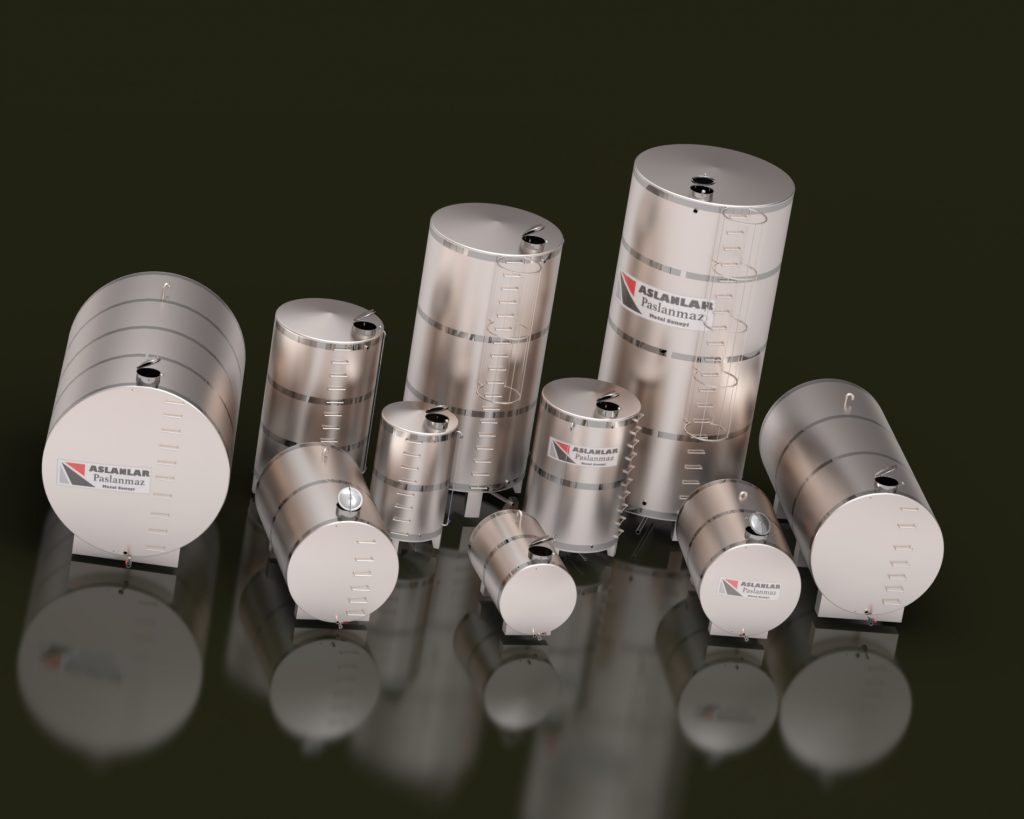
The Role of Stainless Steel Milk Tanks in the Dairy Industry
1. Introduction to Stainless Steel Milk Tanks
Stainless steel milk tanks are special storage vehicles manufactured to meet the quality standards of the dairy industry. The basic properties of stainless steel include high resistance to rust and corrosion, easy cleaning thanks to its smooth surface, and the capacity to meet hygiene standards.
Milk, by its nature, is a product prone to rapid spoilage. Therefore, it is mandatory to provide hygienic environments in both production and storage processes. Stainless steel tanks prevent milk from coming into contact with microorganisms and minimize quality loss.
2. The Importance of Milk Tanks in the Dairy Industry
In milk production facilities, raw milk is usually stored in a refrigerated and sterile environment. Stainless steel tanks undertake the following basic functions in these processes:
- Hygiene: The smooth inner surface of the tanks prevents bacterial growth.
- Temperature Control: The cooling systems inside the tanks keep the milk at low temperatures, preventing spoilage.
- Efficiency: The large-volume milk storage capacity speeds up production processes.
These features contribute to the protection of quality standards in the dairy industry and prevent economic losses.
3. Advantages of Stainless Steel Material
Stainless steel is a material frequently preferred in sensitive sectors such as the dairy industry. Let’s examine the reasons for this in detail:
- Corrosion Resistance: The lactic acid and other substances in milk can corrode ordinary metal tanks. Stainless steel is resistant to these effects.
- Heat Resistance: It does not deteriorate in high-temperature processes such as pasteurization.
- Long Life: Thanks to its durable structure, it offers many years of use.
- Aesthetic Appearance: Its smooth and shiny surface provides a professional look.
4. Hygiene and Safety in Milk Production
Milk is a product very sensitive to bacterial growth. Therefore, ensuring hygiene standards is of great importance in the design and use of milk tanks.
- Hygienic Design: The smooth surface of the tanks prevents the accumulation of milk residues and does not allow bacterial growth.
- Ease of Sterilization: Sterilization processes can be easily done with chemical and steam cleaning methods.
- Legal Compliance: Stainless steel tanks comply with international food safety standards such as HACCP (Hazard Analysis and Critical Control Points).
5. Different Usage Areas of Milk Tanks
Stainless steel milk tanks are used for many purposes in the production of different dairy products:
- Cooling Tanks: Milk from farms must be cooled immediately to prevent spoilage. These tanks keep milk at low temperatures.
- Fermentation Tanks: These tanks, used in the production of products such as yogurt, kefir or cheese, provide the ideal environment for fermentation processes.
- Storage Tanks: In large-scale production facilities, milk is stored in these tanks for long periods.
- Transport Tanks: Portable tanks ensure that milk is safely transported from one point to another.
Each area of use further increases the importance of milk tanks in industrial production processes.
6. Milk Tank Production Processes
The production of stainless steel tanks requires high precision. The production process consists of the following stages:
- Material Selection: Tanks are usually made of AISI 304 or AISI 316 stainless steel.
- Welding Processes: Advanced welding techniques used during the joining of different parts of the tank ensure that the surface is smooth and durable.
- Surface Treatments: The bright and smooth surface is polished to meet hygiene standards.
- Testing and Certification: After production, the tanks undergo rigorous testing and are approved with quality certificates.
7. Types of Stainless Steel Milk Tanks
Stainless steel milk tanks are produced in different shapes and sizes according to their intended use:
- Horizontal Tanks: Usually used for high-volume milk storage.
- Vertical Tanks: Compact tanks that provide maximum capacity in smaller areas.
- Portable Tanks: Used in the process of transporting milk from farms to factories.
- Fixed Tanks: Large-scale tanks that are permanently placed in production facilities.
8. Modern Technology in Milk Tanks
Modern stainless steel milk tanks are equipped with technology.
- Smart Sensors: Optimizes production processes by monitoring temperature, pH and fill level.
- Automation: Cleaning, filling and emptying of tanks can be done automatically.
- Energy Efficiency: New generation tanks minimize environmental impact by keeping energy consumption at a minimum.
9. Environmental and Economic Benefits
Stainless steel milk tanks provide environmental sustainability and economic efficiency:
- Recyclability: Tanks that have reached the end of their service life are environmentally friendly as they are made of recyclable materials.
- Energy Saving: Highly insulated tanks reduce energy costs.
10. Maintenance and Cleaning of Stainless Steel Tanks
Regular maintenance and cleaning of the tanks is critical for the hygienic continuation of milk production.
- Chemical Cleaning: Special detergents are used to dissolve milk residues.
- Steam Cleaning: High-temperature steam destroys bacteria on the tank surface.
- Manual Maintenance: The inner and outer surfaces of the tanks should be checked at regular intervals.
11. Stainless Steel Milk Tanks in Turkey
Turkey has a rapidly developing market in milk production. Domestic manufacturers produce world-class stainless steel milk tanks and meet the increasing demands in the sector.
- Export: Turkey has a competitive position in international markets in terms of stainless steel tanks.
12. The Role of Stainless Steel Milk Tanks in the Future
Technological developments are making stainless steel milk tanks more efficient. Environmentally friendly production processes and innovative solutions that save energy will increase the importance of these tanks.
Result
Stainless steel milk tanks are one of the most critical elements of the dairy industry. Thanks to the hygiene, durability and efficiency features they provide, they both optimize production processes and reduce environmental impacts. In the future, technological innovations will further develop these tanks, increasing their role in the dairy industry.