

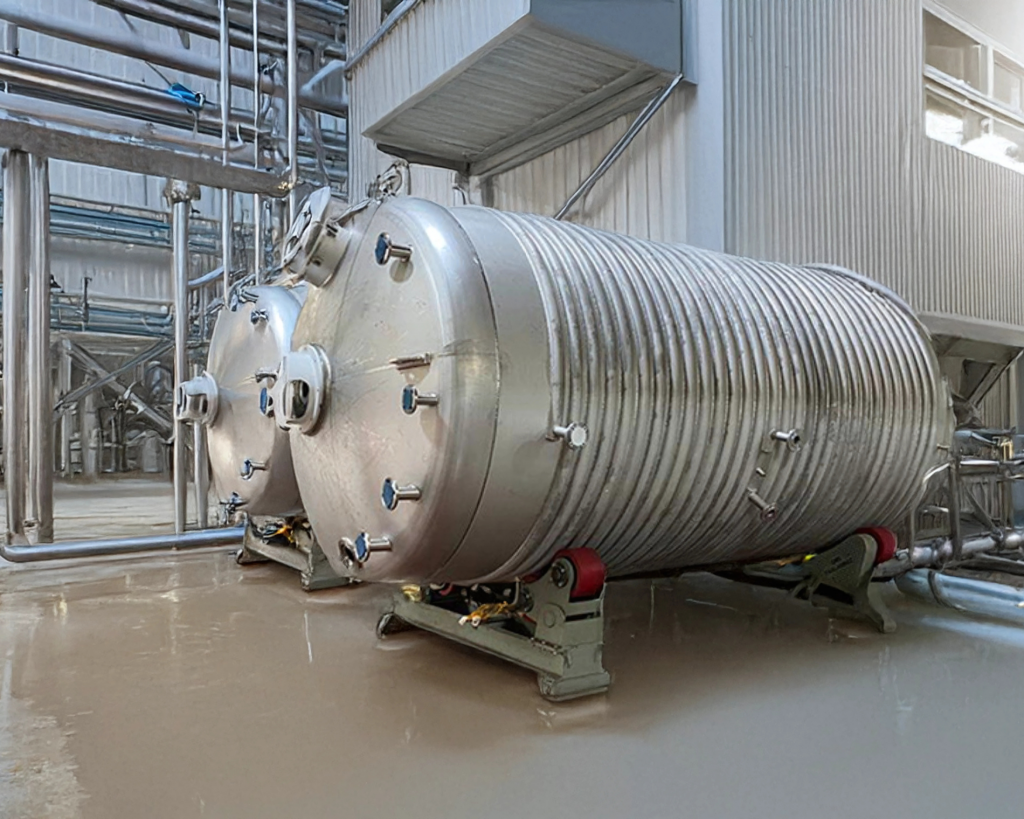
What is a Serpentine Mixer?
A serpentine mixer is a special type of mixer that contains coiled pipes called serpentines. By passing a hot or cold fluid through these pipes, it is possible to keep the temperature of the processed material under control. It is especially used in processes requiring heat transfer and provides significant advantages in terms of energy efficiency.
Working Principle of Serpentine Mixers
Heat Transfer Mechanism
Serpentine mixers enable the transfer of fluids used for heating or cooling purposes. This process works as follows:
- Hot or cold fluid is supplied to the serpentine pipes.
- Heat is transferred to the mixed substance through the surface of the pipes.
- In this way, the mixture temperature reaches the desired level.
For example, a serpentine mixer can be used in a food production facility to keep chocolate in a fluid state.
Fluid Movement and Mixing Process
In serpentine mixers, the movement of the fluid creates a turbulent flow, ensuring a homogeneous mixture. As a result:
- Heat is evenly distributed.
- Product quality increases.
- Unwanted temperature differences are eliminated.
Types of Serpentine Mixers
- Single Pass Systems: Heat transfer is done in one go, works faster and more efficiently.
- Multi-Pass Systems: Suitable for more precise heating and cooling processes.
- Steam and Water Heated Models: Systems that operate with steam or hot water, providing energy savings.
Usage Areas of Serpentine Mixers
Chemical and Petrochemical Industry
It is preferred for chemical reactions to occur at a controlled temperature. It is especially used in reactors, solvent mixtures and polymer production.
Food and Beverage Production
It is used in the dairy, chocolate, confectionery and beverage industries to maintain a homogeneous consistency and the desired temperature.
Pharmaceutical Industry
In drug production, it ensures the stabilization and controlled mixing of active ingredients.
Energy and Waste Management
It provides efficient energy management by being used in biodiesel production and wastewater treatment processes.
Advantages of Serpentine Mixers
- Provides high heat transfer efficiency.
- Reduces costs with energy savings.
- Offers durable and long-lasting use.
- Manufactured from materials with high chemical and thermal resistance.
Things to Consider When Choosing a Serpentine Mixer
- Material Selection: Corrosion-resistant materials such as stainless steel should be preferred.
- Capacity and Pressure Values: Models with the correct flow rate and pressure should be selected according to the area of use.
- Ease of Cleaning and Maintenance: Easy-to-clean models are important in sectors requiring hygiene.
Maintenance and Cleaning of Serpentine Mixers
- It should be regularly cleaned with acidic solutions to prevent calcification and blockages.
- The control of pipes and connection points should be done at regular intervals.
- Sterilization processes are especially important in the food and pharmaceutical industries.
Differences Between Serpentine Mixers and Traditional Mixers
|
Feature |
Serpentine Mixer |
Traditional Mixer |
|
Heat Transfer |
Highly efficient |
Low efficiency |
|
Homogeneous Mixture |
Better |
Lower |
|
Energy Saving |
High |
Medium |
|
Usage Area |
Wide |
More limited |