

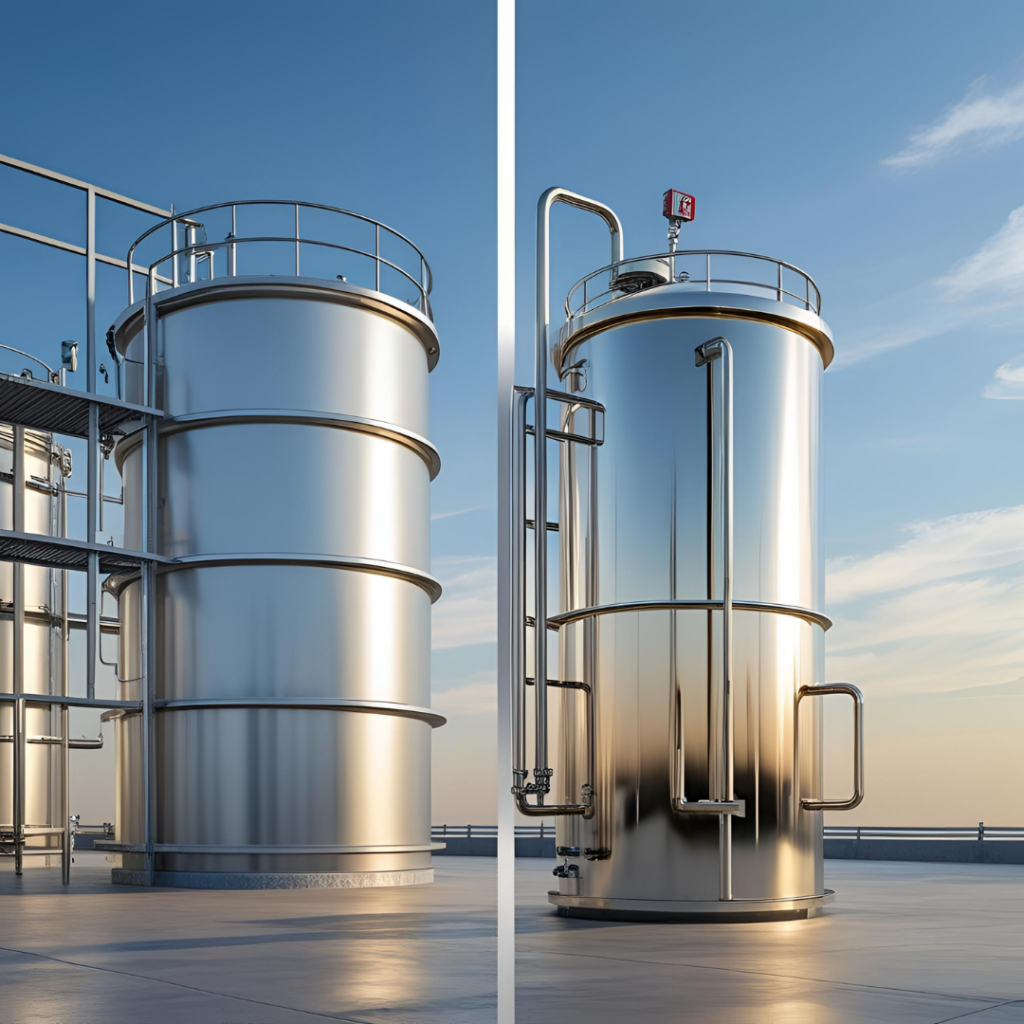
The Importance of Fuel Storage
In the world of energy, fuel oil is still one of the most critical resources. Storing such a valuable and dangerous liquid correctly is of great importance both environmentally and economically. A poorly chosen tank can pollute nature with leaks and cause serious financial damage to your business.
Why is the Right Decision Vital When Choosing a Tank?
An unsuitable tank is not only a loss of investment; it is also a safety risk. Therefore, you must choose the type of tank that best suits your needs. At this point, the question arises: “single-walled” or “double-walled”?
What is a Fuel Storage Tank?
Basic Definition
Fuel storage tanks are industrial products used to safely store diesel, gasoline, and other flammable liquids. These tanks are generally used in above-ground or underground applications.
Usage areas
Industrial Use
Fuels used as an energy source in factories are stored in these tanks.
Agricultural and Logistics Purposes
It is widely preferred in large-scale fuel consumption areas such as agricultural machinery and truck fleets.
Single-Walled Fuel Storage Tanks
Structural Features
Single-walled tanks are made of single-layer steel. They are cost-effective due to their simple structure.
Advantages
- It is cheaper.
- Easy to install.
- Ideal for short-term use.
Disadvantages
Leakage Problems
The risk of leakage increases as a result of cracks and rust that may occur over time.
Environmental Risks
Fuel leakage into the environment can pollute soil and water resources.
Double-Walled Fuel Storage Tanks
What is a Double-Walled Design?
It consists of two layers nested inside each other. The inner tank stores fuel, and the outer wall acts as a second layer of protection against leaks.
Safety and Durability
If there is a leak in the inner tank, the outer wall prevents this leak and the system alerts the user.
Leak Detection and Isolation
Leaks are detected instantly thanks to the sensors located between the two walls. This feature prevents environmental disasters.
Why is it More Preferred?
Long life, low maintenance risk and high safety standards make double-walled tanks the first choice of today.
Differences Between Single-Walled and Double-Walled Tanks
Structural Differences
- Single-walled tank: Single-layer steel structure
- Double-walled tank: Two-layer, insulated structure
Safety Comparison
Double-walled tanks greatly reduce the risk of environmental accidents.
Long-Term Cost Analysis
Although it may seem like a high cost at first, double-walled tanks are more economical in the long run because they reduce maintenance and possible accident costs.
Material Selection: Why Stainless Steel?
Advantages of Stainless Steel
- High corrosion resistance
- Heat resistance
Hygienic structure - Aesthetic appearance
Corrosion Resistance
Stainless steel tanks provide maximum resistance to corrosion, especially in humid environments.
Asinoks’s Quality Standards
asinoks.com makes a difference with its use of stainless steel in accordance with DIN and ISO standards.
asinoks.com’s Production Capacity and Solutions
Production process
Precise cutting with CNC machines and high-strength joining techniques with TIG welding are used.
Custom Design Tank Manufacturing
Products suitable for your business are designed with custom size, volume and connection options.
On-Site Applications and Installation Services
Asinoks not only manufactures, but also stands by you during the installation and commissioning process.
Legal Regulations and Standards in Fuel Tanks
Regulations in Turkey
Production must be carried out in accordance with the regulations determined by EMRA and the Ministry of Environment.
CE and ISO Certificates
Asinoks products are CE marked and ISO 9001 certified.
Environmental Impact Reports
Reporting and monitoring solutions are offered for environmentally sensitive systems.
Installation and Maintenance Tips
Things to Consider During Installation
The tank floor must be flat, solid and have a suitable drainage system.
Importance of Periodic Maintenance
Sensor controls, leak tests and surface control should be performed regularly.
Common Mistakes and How to Avoid Them
Not Choosing the Appropriate Tank
Choosing the wrong tank in the name of short-term savings is harmful in the long run.
Insufficient Maintenance
Lack of maintenance multiplies the risk of leakage.
Not Complying with Security Protocols
Dangers such as fire and explosion can often occur for this reason.
Future Storage Systems
Smart Sensors and Automation
Leaks can be detected instantly with automatic warning systems.
IoT Based Tracking
Remote control and reporting via mobile devices is now possible.
Conclusion and Recommendations
When choosing between single-walled and double-walled fuel storage tanks, it is essential to consider safety, durability and long-term costs. If you are looking for a solution that will serve your business smoothly for many years, double-walled tanks made of stainless steel are definitely the right choice. As asinoks.com, we are at your service with customized solutions and high quality.
Frequently Asked Questions (FAQ)
- In which situations are single-walled tanks preferred?
It is preferred in short-term and low-budget projects, but safety precautions must be taken. - How is leakage detected in double-walled tanks?
Leaks are detected instantly thanks to the sensor system between the two walls. - How durable are stainless steel tanks?
It can be used for up to 30 years if proper maintenance is done. - How often should fuel tanks be maintained?
It is recommended that it be checked by expert teams at least once a year. - What certifications do Asinoks products have?
It has internationally valid quality certificates such as CE and ISO 9001.