

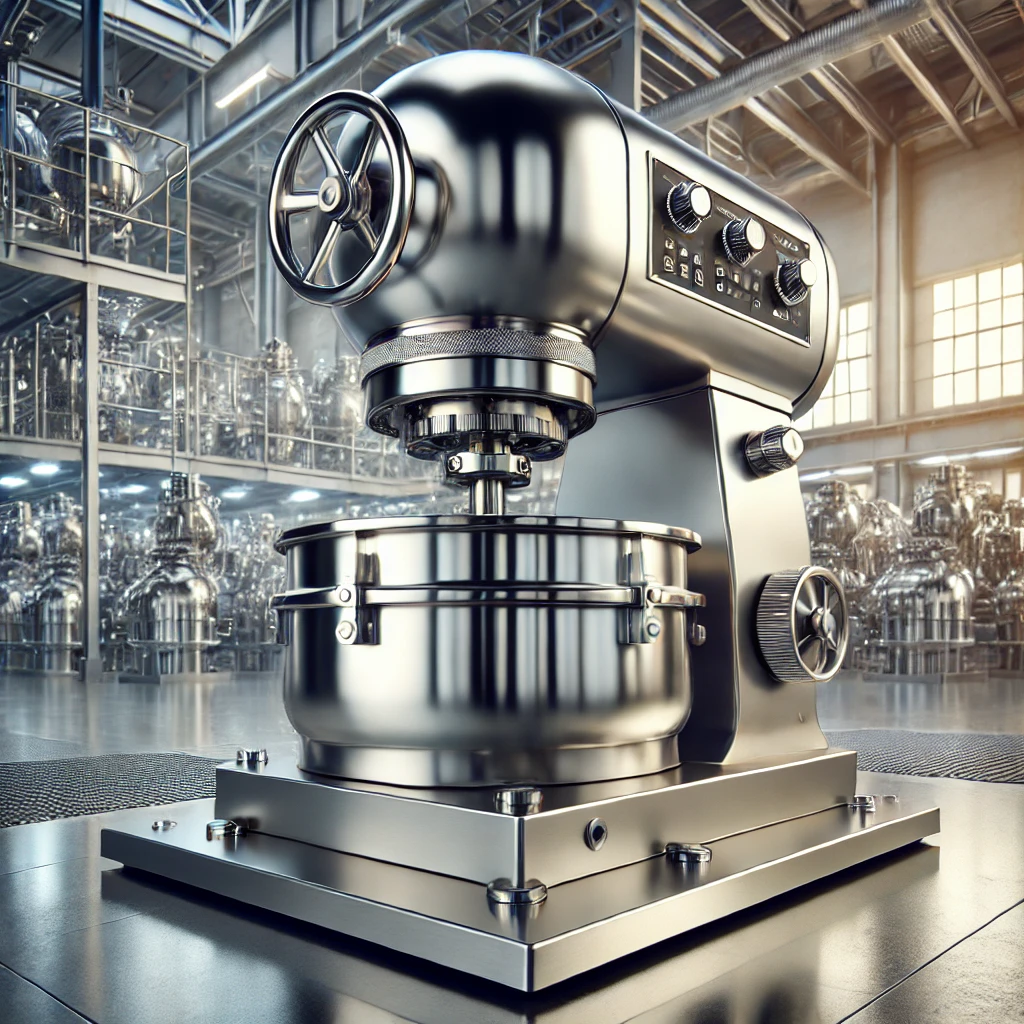
What is an Industrial Mixer?
Industrial mixers can be defined as large-scale and powerful machines designed to mix various materials homogeneously. These mixers can be used to mix both liquid and solid materials. The type of mixer may vary depending on the type of material to be mixed and the production process. For example, mixers used in the chemical industry may have different characteristics than those used in pharmaceutical production.
History and Development of Industrial Mixers
The history of industrial mixers dates back to the industrial revolution. While the first mixers were operated manually, over time these machines have become more automated and efficient. In modern mixers, more precise and faster mixing operations can be performed thanks to digital control systems and sensors. With the advancement of technology, the energy efficiency of mixers has also increased, which has contributed to reducing costs and making production processes more environmentally friendly.
Types of Industrial Mixers
Industrial mixers can be divided into many different types. Each type of mixer is designed to meet a specific mixing need. Here are the most commonly used types of industrial mixers:
- Paddle Mixers: These types of mixers are generally used for mixing heavy and dense materials. Paddles ensure a homogeneous mixture is obtained by regularly directing the mixture.
- Ribbon Mixers: Ideal for mixing powder and granular materials. Ribbon mixers can mix materials quickly and efficiently thanks to their nested ribbon structure.
- Planetary Mixers: Used for high viscosity mixtures. Planetary mixers rotate within the mixing bowl and also rotate around their own axis, providing a more effective mixture.
- Homogenizer Mixers: Designed for mixing liquids and emulsions. These high-speed mixers allow for a fine and homogeneous mixture to be obtained.
Usage Areas of Industrial Mixers
Industrial mixers have an important place in many sectors. The main areas of use are:
- Food and Beverage Industry: Used in the production of various foods and beverages to obtain homogeneous mixtures. It is frequently preferred in the production of dough, sauces, creams and beverages.
- Chemical and Pharmaceutical Industry: Used in the production of chemical components, medicines and cosmetic products. Preparing precise mixtures is of great importance in this sector.
- Construction and Material Production: Plays an important role in mixing concrete, cement and other building materials. In these sectors, large volumes of dense materials need to be mixed.
Industrial Mixer Selection Criteria
Choosing the right industrial mixer is critical to the efficiency of production processes. Here are some important criteria to consider when making a selection:
- Capacity and Production Volume: Choosing a mixer with a capacity suitable for production needs increases efficiency and prevents waste.
- Material Type and Mixture Properties: The technical specifications of the mixer should be evaluated according to the properties of the material to be mixed (viscosity, density, etc.).
- Energy Efficiency and Costs: Low energy consumption and cost-effective mixers reduce operating costs in the long run.
Industrial Mixer Maintenance and Cleaning
Regular maintenance of industrial mixers is important to extend the life of the devices and keep their performance high. Cleaning processes play a critical role in maintaining hygiene standards in production. The following maintenance steps should be followed:
- Maintenance Routines and Failure Prevention: Regularly checking and replacing the parts of the mixers reduces the risk of failure.
- Cleaning Methods and Hygiene Standards: Cleaning the mixers after each use is mandatory, especially in the food and pharmaceutical industries.
Advantages and Disadvantages of Industrial Mixers
Advantages:
- High Efficiency: Industrial mixers save time by completing large volume mixtures in a short time.
- Homogeneous Mixing: Advanced technology mixers increase production quality by providing excellent homogeneity.
- Versatility: Allows the processing of different materials and can be used in various industries.
Disadvantages:
- Energy Consumption: High power consumption can increase operating costs.
- Investment Cost: It may require high initial costs, but this disadvantage can be compensated for in the long run due to the efficiency it provides.
New Technologies and Innovations in Industrial Mixers
Modern industrial mixers have become smarter and more efficient with the development of technology. New innovations include:
- Automation and Digital Monitoring Systems: These systems are used to optimize and monitor mixing processes, thus minimizing human error.
- Energy Saving and Environmentally Friendly Applications: Environmentally friendly mixers consume less energy and contribute to sustainable production processes.
New Technologies and Innovations in Industrial Mixers
Industrial mixers have become smarter and more efficient thanks to rapidly changing and developing technologies. Here are some innovative technologies and applications that have come to the fore in industrial mixers in recent years:
- Automation and Digital Monitoring Systems
- Automation systems used in industrial mixers optimize production processes and minimize human intervention. These systems can automatically adjust mixing ratios and guarantee mixing quality by continuously monitoring throughout the process.
- Energy Saving and Environmentally Friendly Applications
- Today, energy efficiency and environmentally friendly production have become an important focus in industrial mixers. New mixer models are equipped with technologies that reduce energy consumption and minimize carbon footprint. In this way, businesses both save costs and reduce their negative impact on the environment.
- High Speed Mixing Technologies
- High-speed mixers offer a revolutionary development, especially in mixing high viscosity and dense materials. This technology increases production efficiency by shortening the mixing time and allows businesses to produce more in a shorter time.
Conclusion
The advantages that industrial mixers offer to businesses are quite numerous. Choosing the right mixer accelerates production processes, increases product quality and reduces costs. Regular maintenance of mixers and equipping them with modern technology maximizes efficiency.
Therefore, it is very important for businesses planning to use industrial mixers to both analyze their needs correctly and follow technological innovations. Factors to be considered when choosing a mixer include production capacity, energy efficiency, mixer type and material properties.