

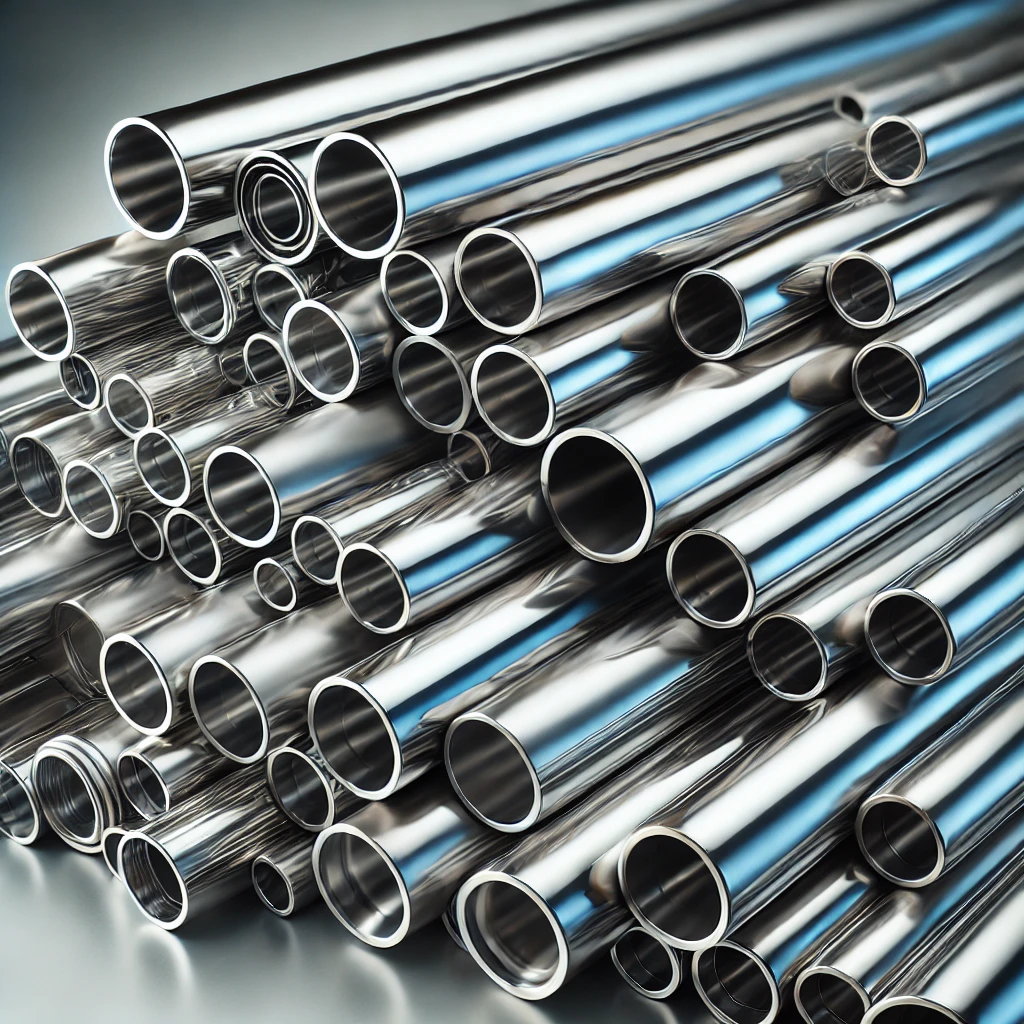
Stainless Steel Pipe and Profile Types: Which Sectors Are Suitable For?
Stainless steel is a preferred material in many sectors due to its durability, corrosion resistance, and aesthetic appearance. Different types of stainless steel pipes and profiles are shaped according to the specific needs of different sectors. In this article, we will discuss in detail the types of stainless steel pipes and profiles, their production processes, and in which sectors these products are used.
1. What is Stainless Steel?
Stainless steel is a type of alloy containing at least 10.5% chromium and known for its resistance to corrosion. Steel acquires its stainless property from the thin oxide layer on its surface. This oxide layer forms when the steel comes into contact with oxygen and prevents the material from rusting. In addition, stainless steel has properties such as high temperature resistance, strength, and machinability.
2. Types of Stainless Steel Pipes
Stainless steel pipes are widely used in construction and industrial applications. They are generally divided into two main types:
Welded Pipes: Produced by bringing the steel sheet into a round shape and welding it. These pipes are generally used in lighter applications.
Seamless Pipes: Produced by piercing a steel billet and turning it into a pipe. This type of pipe is preferred in applications requiring higher pressure and durability.
In addition, the shapes of stainless steel pipes also vary according to the application area:
Square Pipes: Used in aesthetic applications or structural supports.
Round Pipes: Widely preferred in fluid transfer systems, water and gas lines.
Rectangular Pipes: Used in structural supports and special designs.
3. Types of Stainless Steel Profiles
Stainless steel profiles are frequently used as load-bearing elements in the construction sector. The most common profile types are:
Box Profiles: Structural elements with square or rectangular cross-sections and high strength. They provide aesthetics and robustness in modern structures.
Angle and Flat Bar Profiles: Generally used in load-bearing systems and various machines. These profiles can be cut and combined in different ways.
4. Production Process of Stainless Steel Pipe and Profile
The production of stainless steel pipes and profiles goes through various stages:
Processing of Raw Materials: Steel is mixed with pure iron and alloy elements (e.g. chromium, nickel) as raw material.
Shaping and Welding Operations: Pipes are generally shaped by cold or hot rolling techniques. Welding is a critical step in the production of welded pipes.
5. Technical Specifications of Stainless Steel Pipe and Profile
The most prominent features of stainless steel pipes and profiles are:
High Durability: Known for its long life and low maintenance cost.
Corrosion Resistance: Provides high resistance to chemicals and humid environments.
Heat Resistance: Maintains its structural integrity at high temperatures, making it ideal for industrial applications.
6. Use of Stainless Steel in the Industrial Sector
Stainless steel has various uses in industrial facilities:
Chemical and Petrochemical Plants: Stainless steel pipes are preferred in systems operating in acidic and alkaline environments.
Food Processing and Pharmaceutical Industry: The use of stainless steel in environments requiring hygienic conditions ensures that products are processed in a healthy manner.
7. Use of Stainless Steel in the Construction Sector
Stainless steel is preferred in the construction sector due to its durability and aesthetic appearance:
Structural Support and Load-Bearing Systems: Used in large buildings due to its high strength.
Aesthetic Architectural Projects: The shiny surface of stainless steel is ideal for striking designs in modern architecture.
8. Use of Stainless Steel in the Energy Sector
Stainless steel is an important material in energy production facilities, especially in renewable energy projects:
Solar and Wind Energy Systems:
Categories Blog Tags Stainless steel square usage areas, What is stainless steel square