

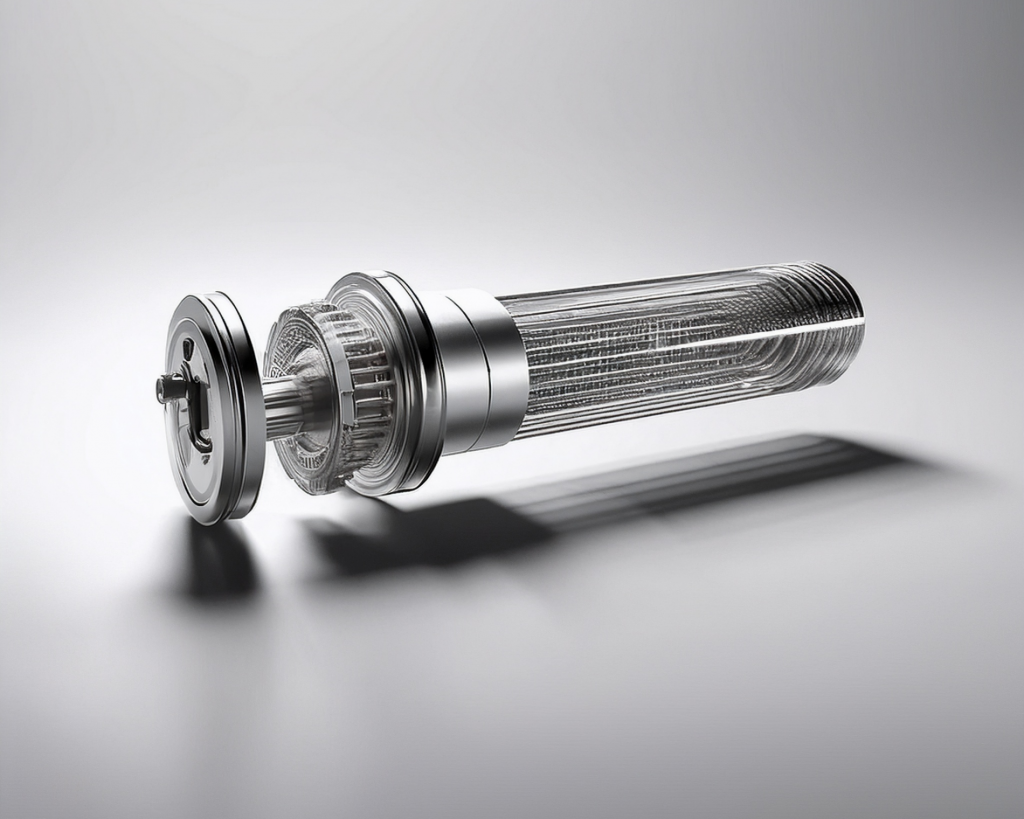
1. What is a Shell and Tube Heat Exchanger?
Shell and tube heat exchangers are mechanical devices that allow liquid or gas fluids to transfer heat without coming into contact with each other. Shell & Tube Heat Exchangers are one of the most commonly used types of shell and tube heat exchangers.
The main purpose of these systems is to transfer the thermal energy of one fluid to another. They are widely used in industrial plants, power plants, petrochemical plants, and heating-cooling systems.
Shell and tube heat exchangers are highly reliable heat exchangers due to their resistance to high temperatures and pressures.
2. Working Principle of Shell and Tube Heat Exchangers
Heat transfer in shell and tube heat exchangers occurs through convection and conduction principles.
- Convection: As one fluid moves inside the tubes, the other fluid circulates outside the tubes.
- Conduction: Heat is transferred from one fluid to another through the tube surfaces.
These systems can be designed according to parallel, counter, and cross flow principles.
3. Types of Shell and Tube Heat Exchangers
Shell and tube heat exchangers can be classified according to different structural and design features:
- Single Pass Heat Exchangers
- Multi-Pass Heat Exchangers
- U-Type Shell and Tube Heat Exchangers
- Shell & Tube Heat Exchangers
Each type is designed according to different application areas and needs.
4. Materials Used in Shell and Tube Heat Exchangers
The materials used in shell and tube heat exchangers are of great importance in terms of the system’s durability and efficiency. Commonly used materials:
- Stainless Steel (Corrosion resistant)
- Copper (High thermal conductivity)
- Titanium (Chemical resistance)
- Carbon Steel (Economical and durable)
5. Advantages and Disadvantages of Shell and Tube Heat Exchangers
Advantages:
✅ High-efficiency heat transfer
✅ High temperature and pressure resistance
✅ Possibility of production with various materials
Disadvantages:
❌ Maintenance and cleaning can be difficult
❌ Initial investment cost may be high
6. Usage Areas of Shell and Tube Heat Exchangers
Shell and tube heat exchangers are widely used in many sectors:
- Power Plants
- Chemical Industry
- Food and Pharmaceutical Industry
- HVAC (Heating, Ventilation, and Cooling) Systems
7. Design Criteria for Shell and Tube Heat Exchangers
The design of shell and tube heat exchangers is an important factor that directly affects the performance and efficiency of the system. Some basic criteria that should be considered during the design process are:
🔹 Heat load calculations: It is necessary to determine how much heat will be transferred in a system. This is calculated by considering the temperature differences and flow rates of the fluids used.
🔹 Tube diameter and length: The diameter and length of the tubes should be selected to minimize the pressure losses of the fluids. Larger diameter tubes cause less pressure loss but can increase costs.
🔹 Tube material: The material used must be suitable for the operating temperature, pressure, and chemical resistance of the exchanger.
🔹 Compact design: Smaller and more efficient designs save space and offer ease of use.
🔹 Ease of cleaning and maintenance: Appropriate clearances should be included in the design to allow the tubes to be easily cleaned.
8. Heat Transfer and Efficiency in Shell and Tube Heat Exchangers
Heat transfer in shell and tube heat exchangers occurs in three basic ways:
1️⃣ Conduction: Heat passes from the metal surface of the tubes to the other side.
2️⃣ Convection: Heat is transferred as fluids move inside or outside the tubes.
3️⃣ Radiation: At very high temperatures (e.g., in power plants), heat can also be radiated.
Some methods used to increase the efficiency of exchangers:
✅ Turbulence-enhancing designs (e.g., spiral-shaped tubes)
✅ Materials with high thermal conductivity
✅ Thinner tube walls (to speed up heat transfer)
✅ Increasing the surface area of the tubes (finned designs)
9. Flow Types in Shell and Tube Heat Exchangers
There are three basic flow arrangements used in shell and tube heat exchangers:
🔹 Parallel Flow: Two fluids flow in the same direction. This design is generally less efficient because the temperature difference decreases rapidly.
🔹 Counter Flow: Fluids flow in opposite directions. This provides maximum heat transfer and creates a more efficient system.
🔹 Cross Flow: One of the fluids flows inside the tubes, while the other flows perpendicular to the tubes. It is often used in air and gas systems.
10. Things to Consider When Choosing a Shell and Tube Heat Exchanger
The following factors should be considered before purchasing or designing a shell and tube heat exchanger:
✔ Application Area: Different designs are required for different applications such as industry, HVAC, energy, or chemical sector.
✔ Operating Temperature and Pressure: A model that can withstand the specified pressure and temperature values should be selected.
✔ Material Durability: If it will come into contact with chemicals, durable materials such as titanium or stainless steel should be preferred.
✔ Efficiency: Models with high heat transfer coefficient should be preferred.
✔ Ease of Maintenance: Easy cleaning of the tubes reduces long-term maintenance costs.
11. Installation and Setup of Shell and Tube Heat Exchangers
The following steps should be followed during the installation process of shell and tube heat exchangers:
1️⃣ Location Selection: The suitability of the area where the device will be placed should be checked.
2️⃣ Connections: It should be ensured that the pipe inlets and outlets are connected correctly.
3️⃣ Gasket and Flange Control: Necessary measures should be taken for sealing.
4️⃣ Testing Phase: After the installation is completed, the system should be tested for leaks.
5️⃣ Commissioning: The device should be operated at full capacity and observed.
It is recommended to have a team of expert engineers or technicians during installation.
12. Maintenance and Cleaning of Shell and Tube Heat Exchangers
If regular maintenance is not performed, the tubes will calcify, clog, and heat transfer efficiency will decrease. Cleaning methods are:
🔹 Chemical Cleaning: Residues are dissolved with acid or special cleaning chemicals.
🔹 Mechanical Cleaning: The inside of the tubes is cleaned with brushes or pressurized water.
🔹 Corrosion Prevention: Corrosion-preventive coatings can be used.
🔹 Filter Usage: Filters should be used to prevent solid particles from entering the tubes.
If maintenance is not performed periodically, system performance may decrease and energy costs may increase.
13. Common Problems Encountered in Shell and Tube Heat Exchangers
🛑 Leaks: May occur as a result of aging of gaskets or perforation of tubes.
🛑 Blockages: The inside of the tubes may narrow due to calcification or sediment accumulation.
🛑 Corrosion: Corrosive fluids can cause the tubes to rust over time.
🛑 Overheating: If fluid circulation is insufficient or the system is blocked, the temperature may become uncontrollable.
Regular maintenance should be performed and appropriate materials should be selected to prevent these problems.
14. Future and Innovations of Shell and Tube Heat Exchangers
Shell and tube heat exchangers are becoming more efficient with technological developments:
🔹 Use of Nanotechnology: Nanomaterials with high thermal conductivity increase heat transfer efficiency.
🔹 Smart Sensors: Thanks to IoT (Internet of Things) based sensors used in heat exchangers, faults can be detected in advance.
🔹 Energy Recovery Systems: More efficient use can be achieved by recovering waste heat.
These innovations are of great importance for reducing energy costs and developing environmentally friendly systems in the industry.
📌 Frequently Asked Questions (FAQ)
🔹 What is the lifespan of shell and tube heat exchangers?
📌 With quality material and regular maintenance, it can last between 20-30 years.
🔹 What is the best material for shell and tube heat exchangers?
📌 Stainless steel and titanium are the most corrosion-resistant options.
🔹 How to clean shell and tube heat exchangers?
📌 Periodic maintenance should be performed using chemical and mechanical cleaning methods.
🔹 In which sectors are heat exchangers used?
📌 It is used in many fields such as power plants, chemical industry, food industry, HVAC systems.