

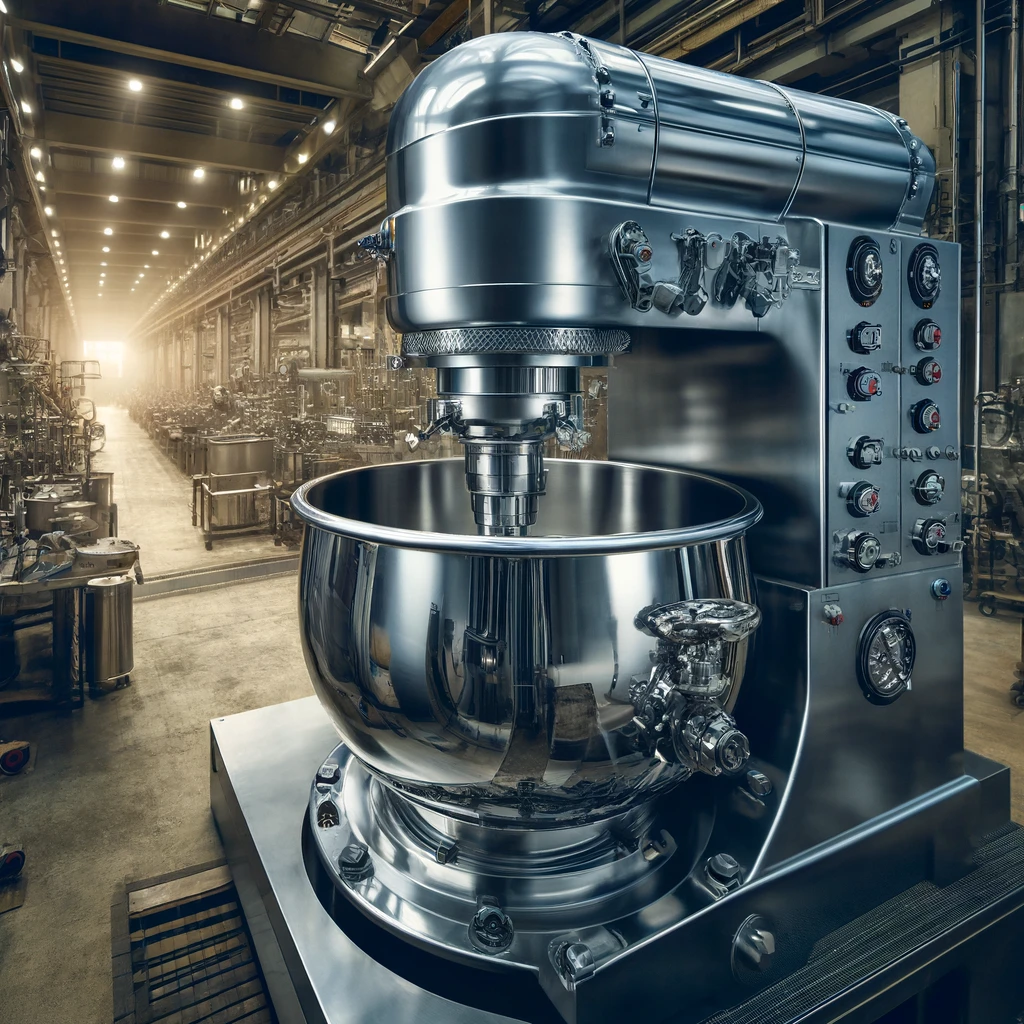
What is Industrial Mixer Manufacturing?
Industrial mixer manufacturing is a process that includes the design, production, and assembly of large-scale mixers and agitators used in various industries. These machines ensure the effective mixing of different substances to achieve a homogeneous mixture. They are indispensable in many industries, such as chemical, food, pharmaceutical, and construction.
Types of Industrial Mixers
Industrial mixers can be divided into various types according to their areas of use and requirements:
Stationary Mixers
Stationary mixers are mixers that are mounted on built-in systems and are not moved. They are often used in large production facilities and designed for continuous production.
Portable Mixers
Portable mixers are ideal for smaller-scale applications and production environments that require flexibility. They are easily portable and can be used in various production lines.
Intensive Mixers and Blenders
Intensive mixers are used to process high-viscosity materials. These types of mixers are particularly preferred in the chemical and pharmaceutical industries.
Application Areas of Industrial Mixers
Industrial mixers play a critical role in many industries:
Usage in the Food Industry
In the food industry, it is important to mix various materials to obtain homogeneous mixtures. It is widely used in the production of yogurt, sauces, beverages, and other products.
Applications in the Chemical Industry
Proper mixing is essential for chemical reactions to take place correctly. These devices, used in chemical production processes, play an important role in increasing product quality.
Role in Pharmaceutical and Cosmetic Production
In the pharmaceutical and cosmetic industries, industrial mixers are used to homogeneously distribute active ingredients. These devices are indispensable for ensuring the effectiveness and reliability of products.
Industrial Mixer Manufacturing Process
Industrial mixer manufacturing requires careful planning and precise production processes:
Design and Planning Stages
Each production process begins with a detailed design and engineering phase. The technical specifications, production capacity, and design details of the required mixer are determined at this stage.
Material Selection and Supply Chain Management
Material selection directly affects the durability and performance of the mixer. Stainless steel, plastic, or other composite materials may be preferred.
Production Techniques and Assembly Processes
High-quality mixers are produced using the best assembly techniques and modern production equipment during production. The assembly phase is carried out meticulously to ensure the product’s longevity and efficient operation.
Material Types and Selection
The materials used in the manufacture of mixers are of great importance in terms of performance and durability.
Use of Stainless Steel
Stainless steel is widely used in industrial mixer production due to its durability and corrosion resistance.
Plastic and Other Composite Materials
In some applications, plastic and composite materials, which offer lighter and more economical solutions, are preferred.
Material Durability and Performance Criteria
When selecting materials, it is important to use materials suitable for the chemical components and operating conditions of the production environment.
Advantages of Industrial Mixers
Industrial mixers provide significant advantages in production processes:
Increased Efficiency
These devices provide much faster and more homogeneous mixing compared to manual mixing processes. This increases production speed, saves time, and maximizes efficiency in the production line.
Shortening Production Times
Industrial mixers make it possible to prepare large volumes of mixtures in a short time. Especially in facilities that perform continuous production, production times can be significantly shortened thanks to the use of mixers.
Cost Savings and Energy Efficiency
Thanks to the automatic mixing process, labor costs are reduced, and energy consumption can be optimized. This both provides a more economical production process and supports an environmentally friendly approach.
Custom Manufacturing Options and Customization
The custom design and manufacture of industrial mixers can respond to the specific needs of businesses:
Design According to Customer Needs
Each industry and production line has different requirements. Manufacturers can optimize the performance and efficiency of mixers by offering custom design solutions according to customer demands.
Special Mixer Blades and Speed Settings
Mixer blades and speed settings can be customized according to the type of materials being processed. This ensures that the mixing process is carried out at the optimum level for each material.
Industrial Mixer Maintenance and Repair
Maintenance and repair processes play a critical role in the longevity of industrial mixers:
Regular Maintenance Procedures
Regular maintenance of industrial mixers is necessary to maintain the device’s performance and prevent malfunctions. This includes operations such as cleaning and lubricating the machine’s parts, and replacing necessary parts.
Troubleshooting and Repair Techniques
In the event of mixer malfunctions, fast and effective troubleshooting techniques minimize production line downtime. Therefore, it is important for operators to have basic repair skills.
Tips for Longevity
In addition to regular maintenance, it is recommended to avoid overloading and misuse for mixers to operate smoothly for a long time.
Safety Measures and Standards
Certain standards and measures are required for the safe use of industrial mixers:
Worker Safety and Protective Equipment
Businesses must use appropriate protective equipment and safety procedures to ensure the safety of employees. It is important for operators to wear appropriate glasses, gloves, and clothing when working with the mixer.
Compliance with ISO and CE Standards
Industrial mixers must comply with international safety and quality standards. Certifications such as ISO and CE guarantee that the devices are safe and of high quality.
Industrial Mixer Purchasing Guide
There are a few important points to consider during the mixer purchasing process:
Pricing and Budget Planning
The cost of mixers varies depending on their size, capacity, and technical specifications. When planning a budget, it is important to consider long-term maintenance costs and energy consumption.
Choosing a Reliable Supplier
Choosing a reliable supplier is one of the most critical steps in purchasing a high-quality industrial mixer. The supplier’s warranty, service offerings, and customer references should be carefully reviewed.
Environmental Impact and Sustainability
Environmentally friendly production processes are becoming increasingly important in industrial mixer manufacturing:
Importance of Energy-Efficient Models