


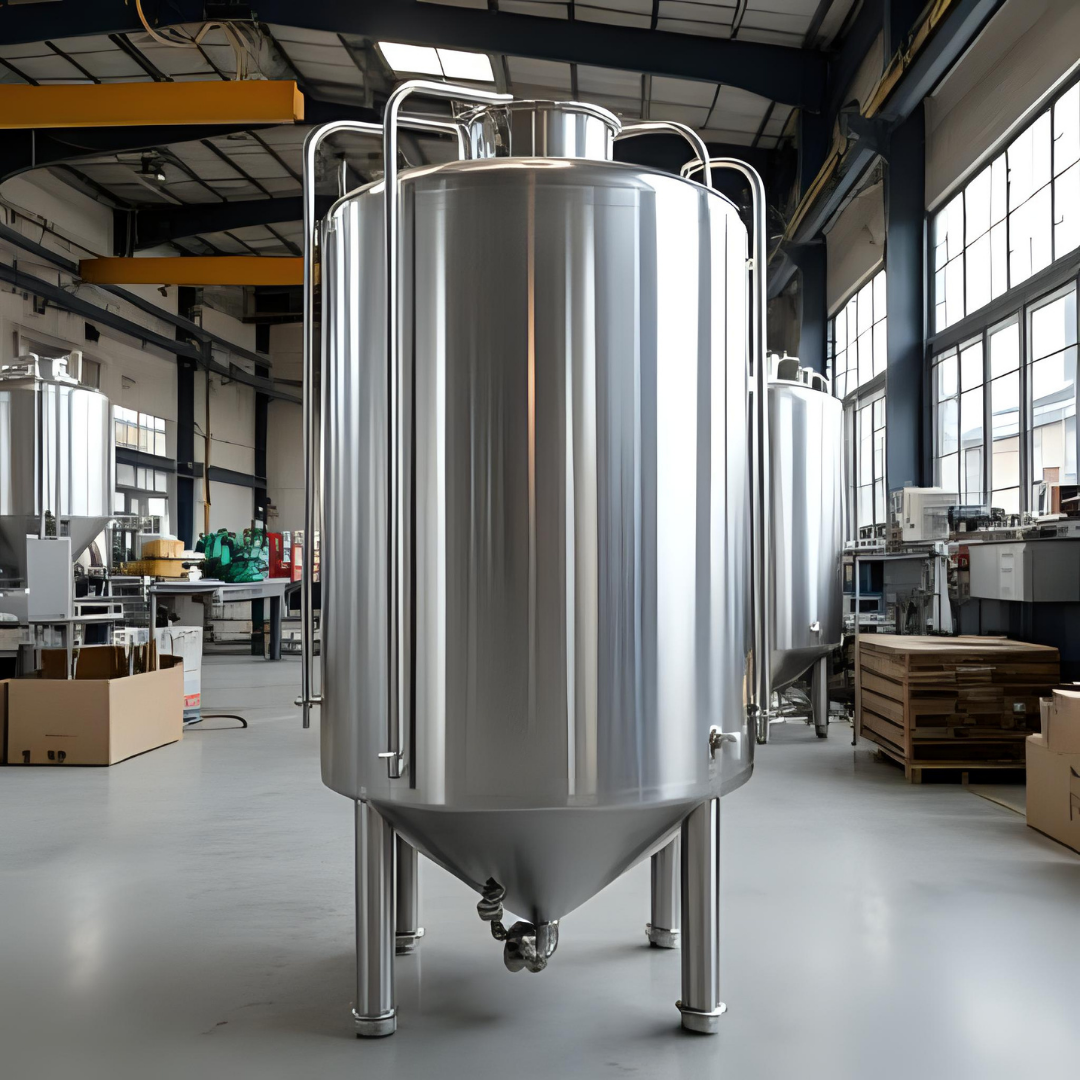
For production processes in the food, chemical, pharmaceutical, and cosmetics sectors to proceed efficiently, the equipment used must be durable, hygienic, and long-lasting. At this point, industrial stainless steel tanks stand out as one of the most important systems for professional production facilities.
Industrial tanks made of stainless steel are widely preferred in modern production facilities due to their high-temperature resistance, compliance with hygiene standards, and energy efficiency.
In this article, we will examine in detail the types of industrial stainless steel tanks used in professional production facilities, their areas of use, advantages, and the differences between them and plastic tanks.
What is an Industrial Stainless Steel Tank?
Industrial stainless steel tanks are industrial equipment used for mixing, cooking, storing, heating, or processing liquid or semi-liquid products. They are generally produced from AISI 304 or AISI 316 quality stainless steel.
- Resistant to corrosion
- Supports hygiene standards
- Provides long-lasting use
- Easy to clean
- Resistant to chemical reactions
These features provide significant advantages, especially in the food, pharmaceutical, and chemical sectors.
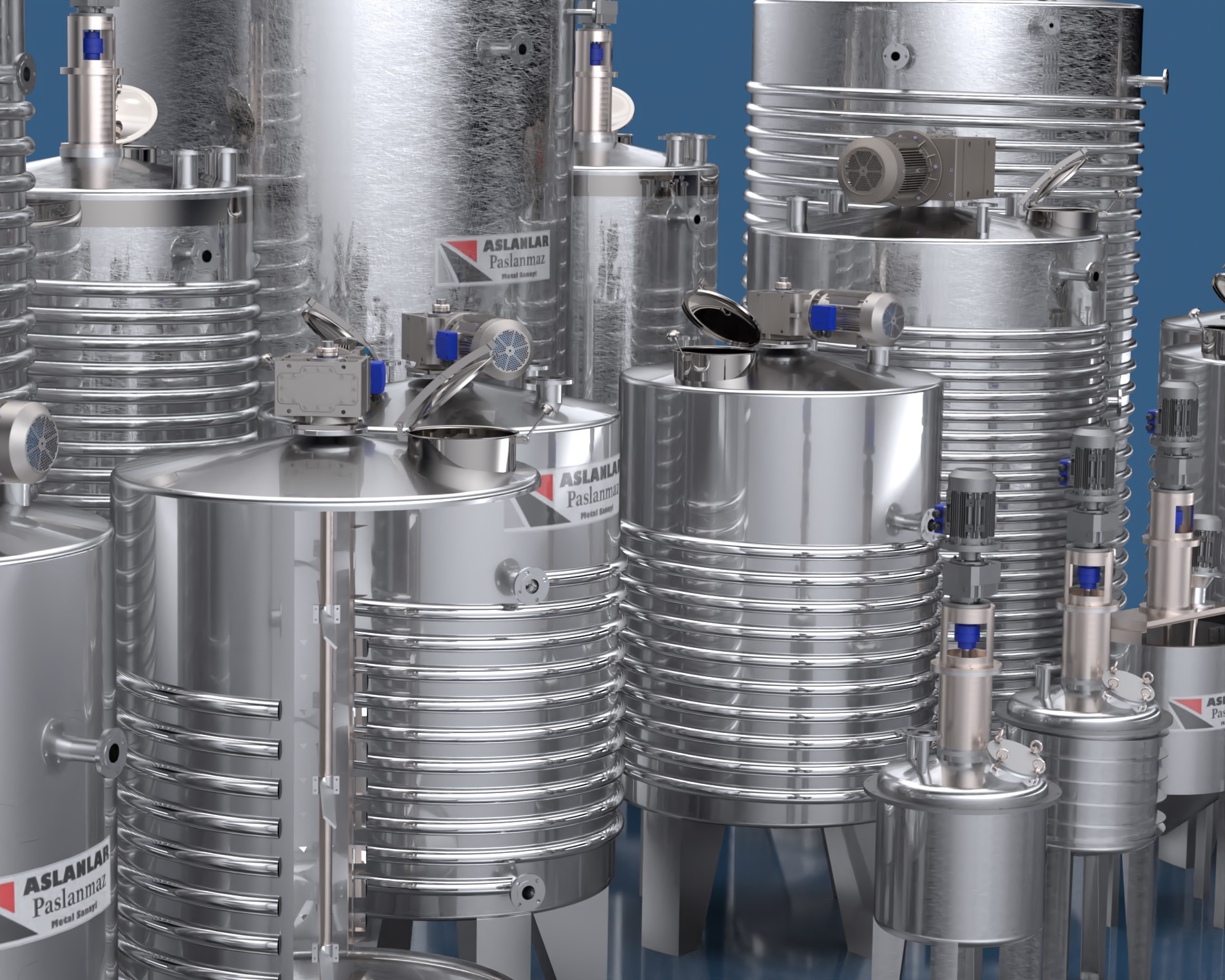
Types of Stainless Steel Tanks Used in Professional Production Facilities
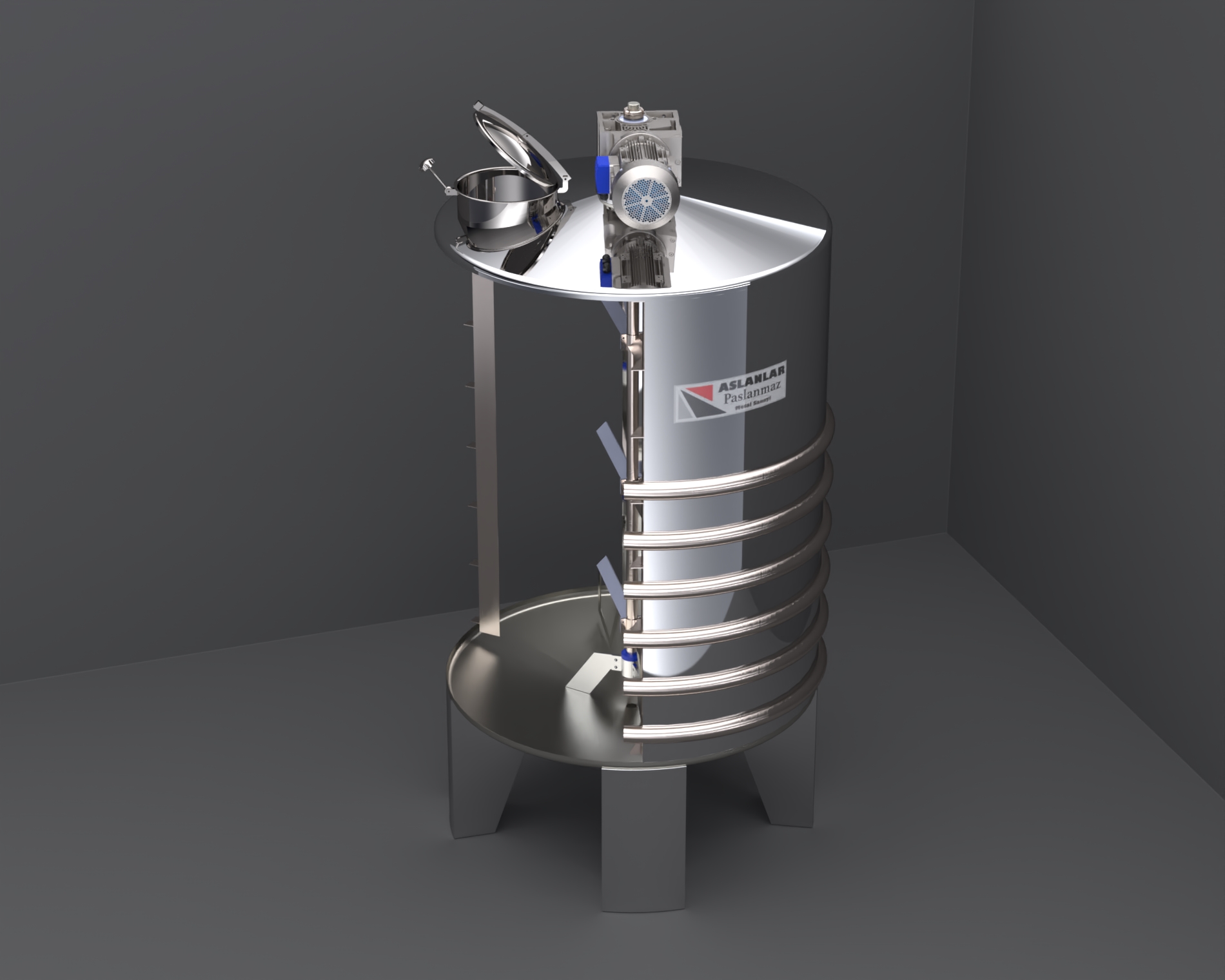
1. Stainless Steel Tanks with Mixers
Used in production processes that require mixing. Especially preferred for dairy products, sauce production, cosmetic products, and chemical mixtures.
Thanks to motorized mixing systems, the product is processed homogeneously. Heated models increase production efficiency.
2. Jacketed (Double Jacket) Stainless Steel Tanks
These tanks have a double-walled structure. Controlled heating is provided with the help of steam or hot water.
- Ensures even heat distribution
- Offers energy saving
- Provides precise temperature control
- Prevents the product from burning
It is widely used, especially in chocolate, jam, and milk processing facilities.
3. Vacuum Stainless Steel Boilers
It enables production under low pressure thanks to vacuum technology.
- Cosmetic production
- Pharmaceutical industry
- Chemical processes
- Food concentrate production
Vacuum systems optimize the production process while preserving product quality.
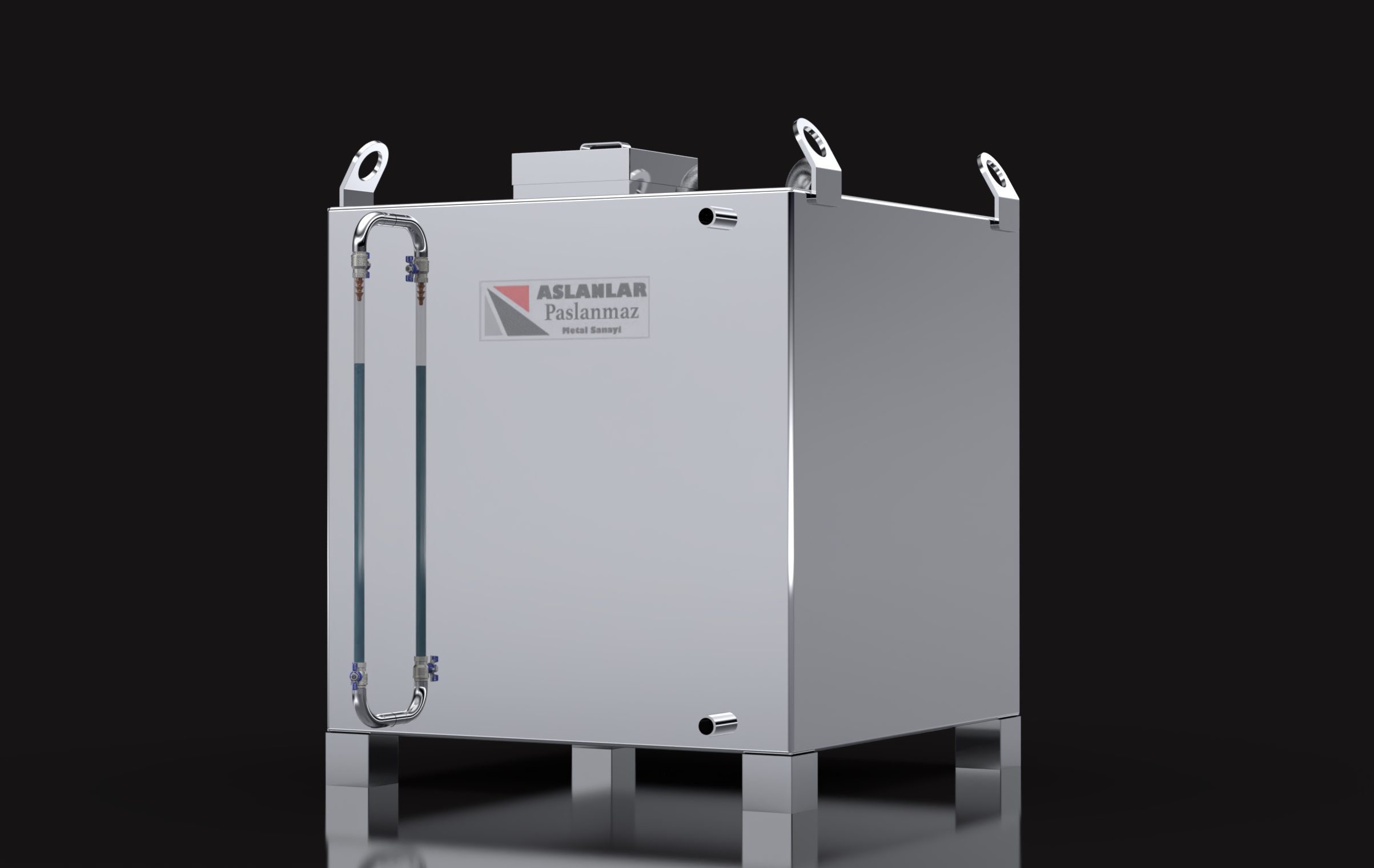
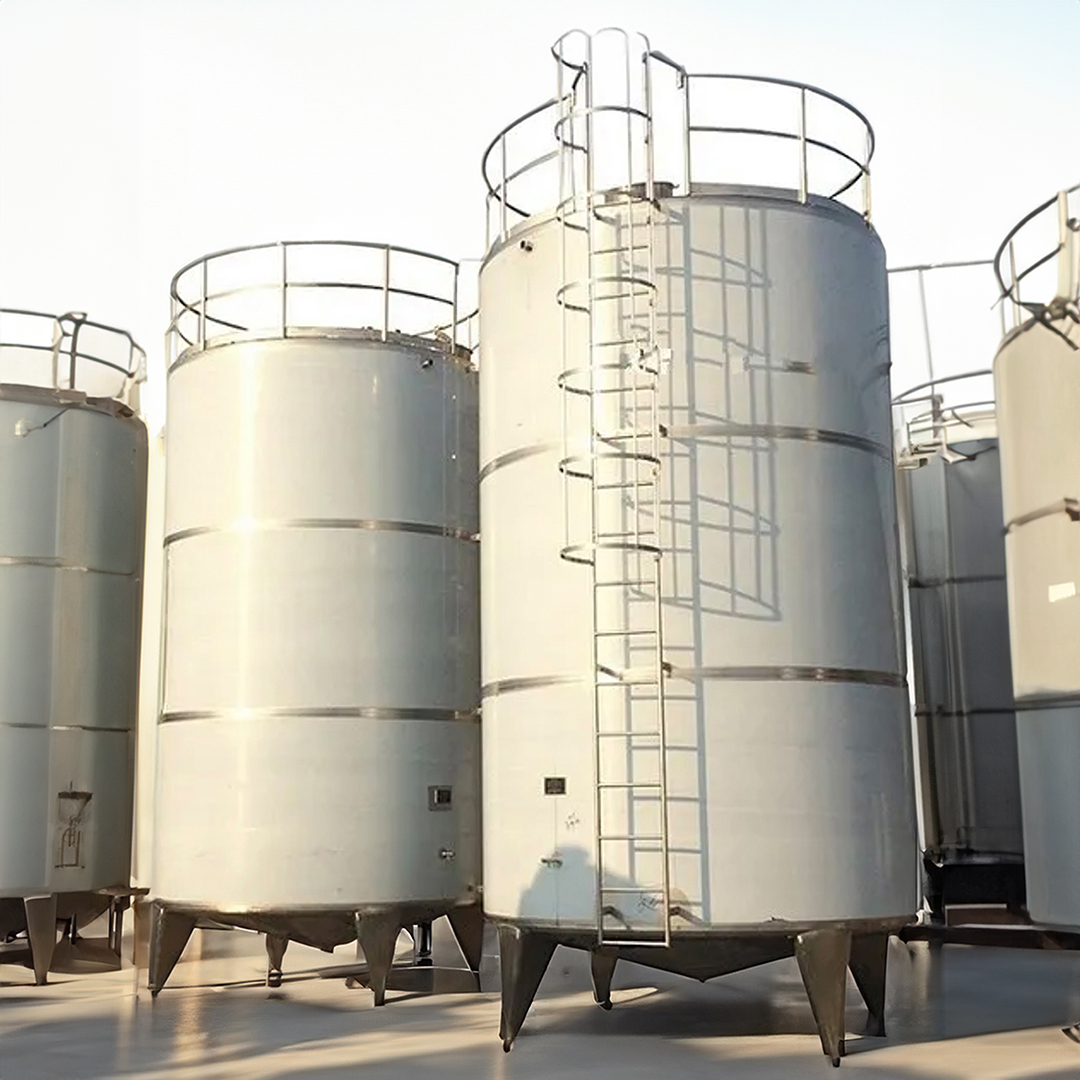
4. Storage and Stock Tanks
Ensures hygienic storage of manufactured products.
- High volume capacity
- Leak-proof structure
- Easy-to-clean surface
- Long-term durability
5. Pressurized Stainless Steel Boilers
Developed for production systems operating under high temperature and pressure.
Provides safe use in chemical plants, steam systems, and industrial production lines.
Advantages of Industrial Type Stainless Steel Boilers
Hygienic Production
The stainless steel surface makes it difficult for bacteria to harbor. This is especially important in the food and pharmaceutical industries.
Long-lasting Use
Thanks to its corrosion-resistant structure, it can be used safely for many years.
Energy Efficiency
Modern insulation and heating systems reduce energy costs.
Easy Cleaning
It can be easily cleaned with CIP (Clean In Place) systems.
Production Efficiency
Product quality is increased thanks to homogeneous mixing and controlled heat.
Differences Between Industrial Stainless Steel Boilers and Plastic Tanks
The selection of equipment used in professional production facilities is of great importance in terms of hygiene, durability, and long-term cost. Especially when choosing between stainless steel industrial boilers and plastic tanks, the purpose of use should be carefully evaluated.
| Feature | Industrial Stainless Steel Boilers | Plastic Tanks |
|---|---|---|
| Durability | Offers high durability, can be used for many years | More sensitive to impact and temperature |
| Hygiene | Suitable for food and pharmaceutical industries | Hygiene level may be limited depending on the area of use |
| Temperature Resistance | Resistant to high temperatures | Deformation may occur at high heat |
| Chemical Resistance | Provides strong resistance to chemicals | Can be affected by some chemicals |
| Area of Use | Ideal for industrial production facilities | Mainly used for liquid storage |
| Cleaning | Easy to clean and sterilize | Cleaning processes are more limited |
| Lifespan | Provides a long-lasting investment | Shorter period of use |
| Cost | Higher initial investment cost | Offers a more economical initial cost |
| Pressure Resistance | Suitable for pressurized systems | Not suitable for pressurized use |
| Energy Efficiency | Provides high efficiency thanks to thermal insulation | Low energy efficiency |
What to Consider When Choosing Industrial Stainless Steel Boilers?
- Production capacity
- Purpose of use
- Heating system
- Mixer type
- Steel quality
- Energy consumption
- Hygiene standards
- Automation system
Especially in the food and pharmaceutical sectors, AISI 316 quality stainless steel is recommended.
In Which Sectors Are They Used?
- Food production facilities
- Milk and dairy product factories
- Beverage production facilities
- Chemical industry
- Cosmetics production
- Pharmaceutical industry
- Industrial kitchens
- Textile chemical production
Frequently Asked Questions
Which industrial stainless steel boilers are preferred for professional production facilities?
In production facilities, agitated, jacketed, vacuum, and pressurized stainless steel boiler models are generally preferred. Production capacity and sector needs should be considered when making a selection.
Why are industrial stainless steel boilers preferred?
Hygienic structure, long service life, energy efficiency, and corrosion resistance are the reasons for their preference.
Which stainless steel boiler models are used in the food sector?
In the food sector, agitated, jacketed, and storage tank type stainless steel boilers are most commonly used.
What should be considered when purchasing an industrial stainless steel boiler?
Capacity, steel quality, energy consumption, automation system, and purpose of use are among the most important selection criteria.
Which type of steel is better for stainless steel boilers?
While AISI 304 is sufficient for standard use, AISI 316 quality stainless steel is more advantageous in areas requiring chemical resistance and intense hygiene.
What are the advantages of vacuum stainless steel boilers?
It preserves product quality, speeds up the production process, and provides high efficiency in sensitive productions due to its ability to operate under low pressure.
In which sectors are industrial type stainless steel boilers used?
They are widely used in food, chemical, pharmaceutical, cosmetic, beverage, and industrial production facilities.
Which stainless steel boiler models provide energy saving?
Jacketed and insulated modern stainless steel boiler systems offer more efficient solutions in terms of energy saving.