

📌 Key Takeaways
- Material Selection: AISI 316 / 316L (EN 1.4404) grade stainless steels, which provide high corrosion resistance, should be preferred in heavy industrial and aggressive chemical environments. For standard liquid storage, AISI 304 / 304L grade is sufficient.
- Sustainability and ROI: Stainless steel tanks offer a higher Return on Investment (ROI) compared to alternatives, with a lifespan exceeding 30+ years, zero risk of leakage, and low maintenance costs.
- Application Areas: Meets industrial standards in process water, aggressive chemicals, treatment/greywater recovery, high-temperature liquids, and fire water storage.
- Certification: ISO 9001, EN 1090, and ISO 3834 standards (which certify welding quality) should be sought for heavy industrial storage tanks.
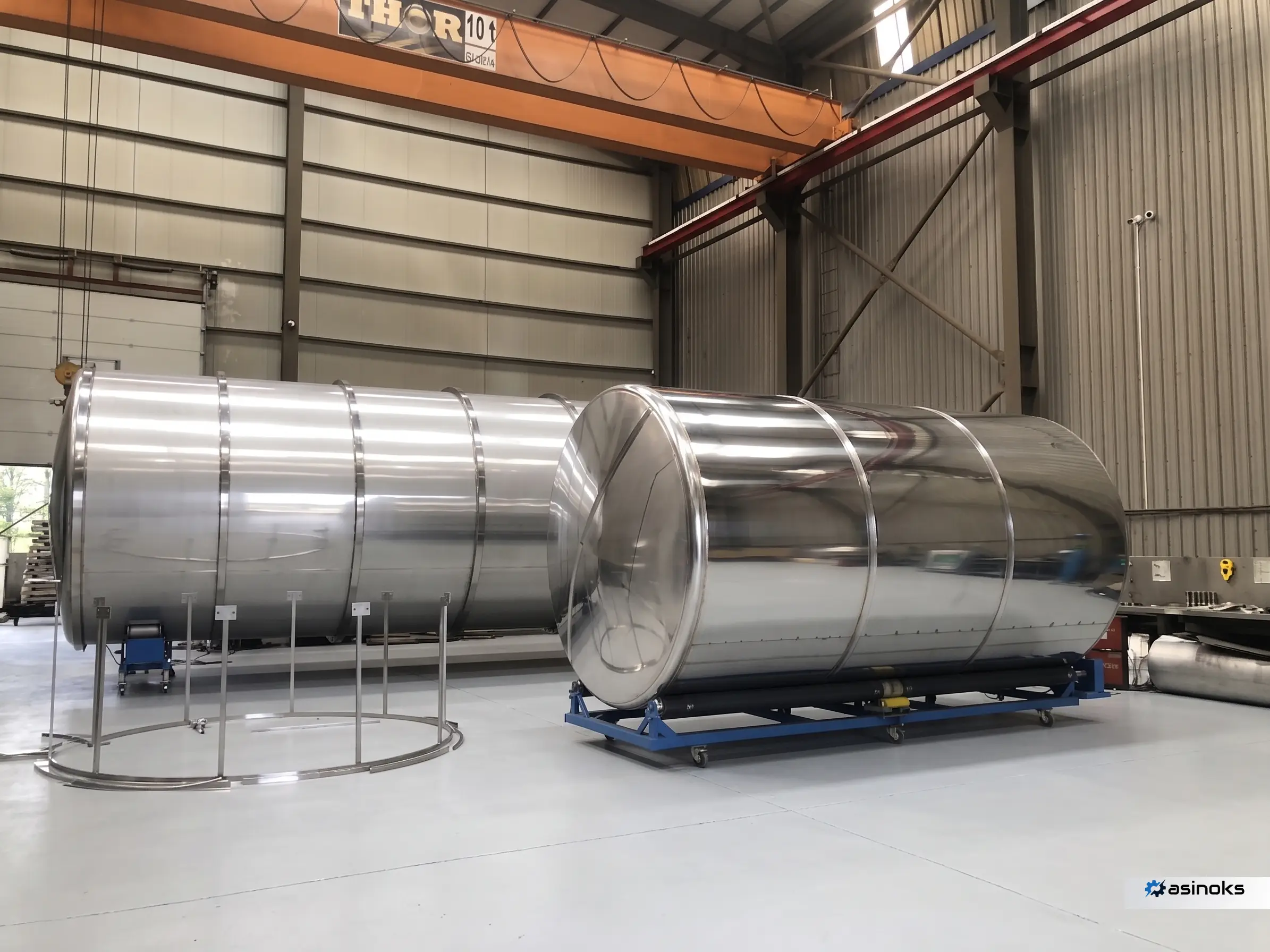
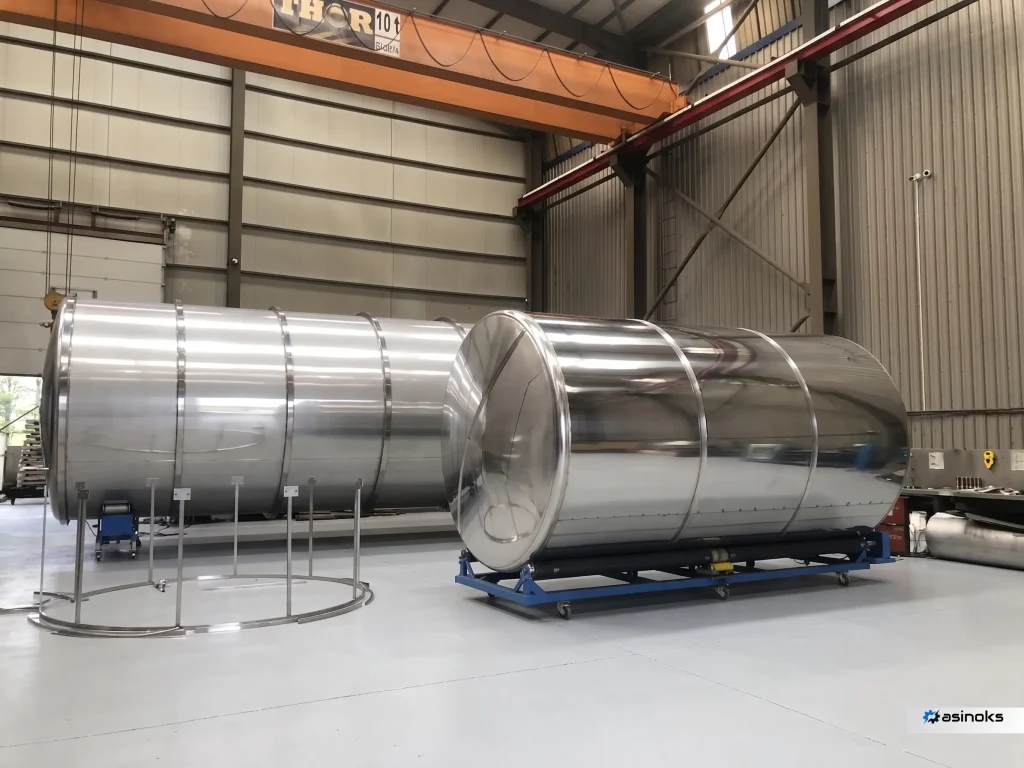
Heavy Industrial Stainless Steel Liquid Storage Tank
In heavy industrial plants, mining sites, power stations, and chemical factories, liquid storage operations are subject to much harsher conditions than in standard facilities. High temperatures, vibration, corrosive atmospheres, heavy chemicals, and the pressure of continuous production make the durability of storage systems a critical risk factor.
So, how can long-lasting liquid storage be ensured under heavy industrial conditions? Why should industrial facilities invest in stainless steel tank technologies? In this guide, we examine the technical details and operational advantages of selecting stainless steel tanks for heavy industry.
Liquid Storage Risks in Heavy Industry and the Stainless Steel Solution
Traditional storage tanks (plastic, polyester, or coated carbon steel) used in heavy industrial environments suffer severe wear and tear over time:
- Corrosion and Rusting: Humid, acidic, or gaseous atmospheres rapidly degrade metals.
- Structural Fatigue (Thermal and Mechanical Shocks): High temperature fluctuations and ambient vibrations cause cracking at tank joints.
- Leakage and Environmental Risks: Leakage of hazardous liquids leads to both production downtime and severe environmental penalties.
Stainless steel tank technologies provide complete protection against corrosion thanks to a passive chromium oxide layer that forms naturally on the surface due to chromium-nickel (and molybdenum) alloys. This structure withstands harsh external environmental conditions and the aggressiveness of the liquid inside.
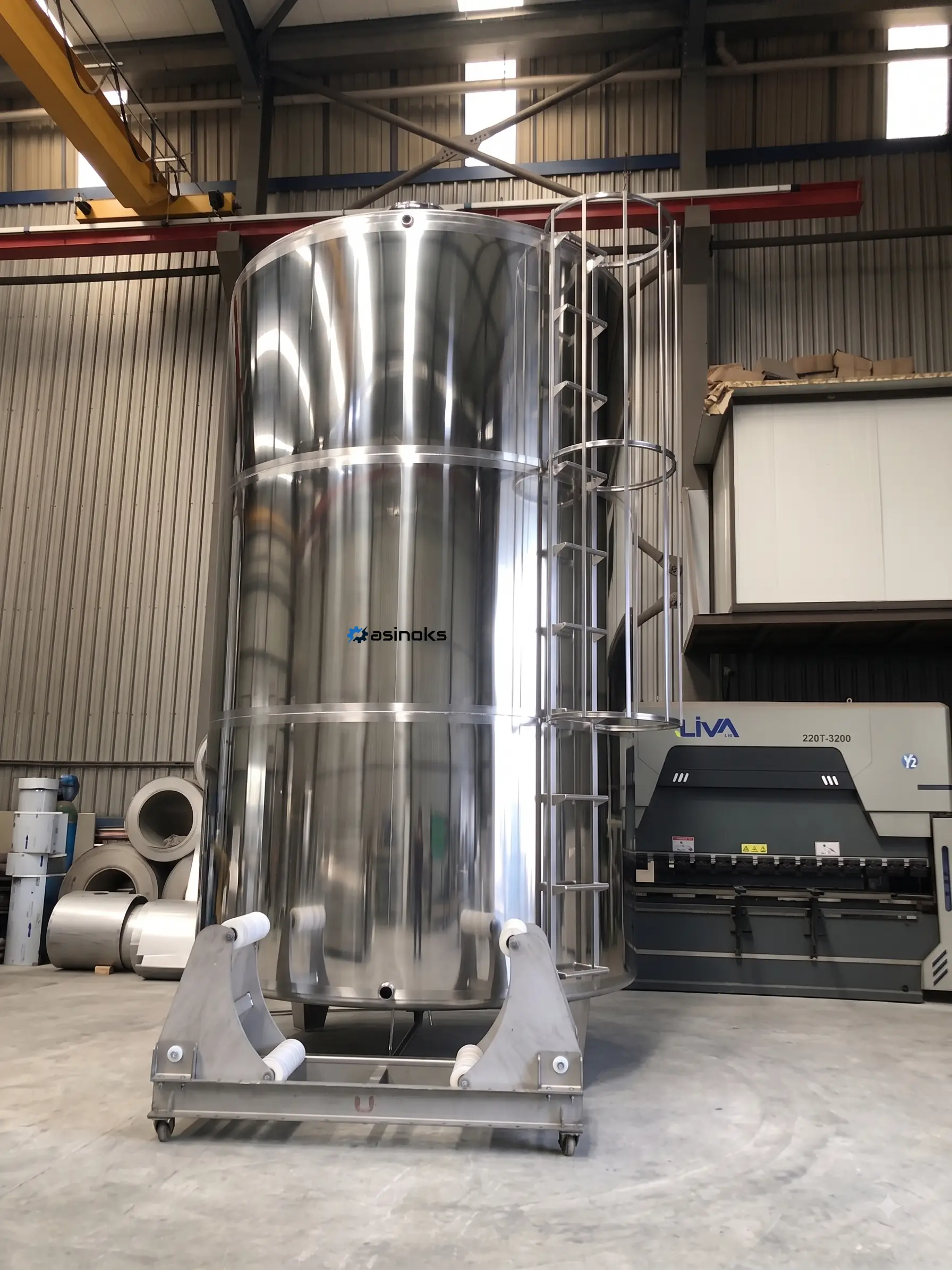
Industrial stainless steel tank used in a heavy industry facility
304 or 316L? Selecting the Right Stainless Steel Grade for Heavy Industry
The biggest mistake made when ordering an industrial liquid tank is selecting the wrong material grade. The correct stainless steel grade must be chosen based on your facility’s needs:
| Feature / Parameter | AISI 304 / 304L | AISI 316 / 316L |
|---|---|---|
| Alloy Composition | 18% Chromium, 8% Nickel | 16% Chromium, 10% Nickel, 2% Molybdenum |
| Corrosion Resistance | Standard ambient and fresh water conditions | Acidic, chlorinated, and saline chemical environments |
| Application Area | Process water, cooling water, fire storage tanks | Acids, solvents, aggressive chemicals, and treatment plants |
| Cost / Performance | Economical and highly durable | Maximum lifespan under demanding chemical conditions |
Technical Tip: For industrial tanks requiring welded fabrication, the low-carbon “L” series (304L or 316L) should be preferred. This eliminates the risk of corrosion (intergranular corrosion) in the weld zones.
Prominent Stainless Steel Tank Technologies in Heavy Industry
With advancing engineering solutions, needs-focused tank types come to the fore in heavy industry:
1. Prismatic Modular Stainless Steel Tanks
Consists of panels assembled on-site by passing through narrow doors within the facility. Thanks to their bolted and gasketed structure, they allow liquid storage in massive volumes without damaging the factory’s existing architecture.
2. TIG-Welded Cylindrical Tanks
Preferred in high-pressure, vacuum, or hot liquid storage processes. Thanks to non-destructive testing (Penetrant, NDT) applied during manufacturing, they serve for many years with zero defects.
3. Jacketed and Thermally Insulated Storage Systems
For high-viscosity liquids, oils, or process chemicals that need to be maintained at a specific temperature, rock wool / polyurethane-insulated and resistance/coil-heated stainless steel tanks are used.
ROI (Return on Investment) Advantages of Using Stainless Steel Tanks in Heavy Industry
Although the initial investment cost appears higher than plastic or sheet metal tanks, stainless steel tanks are the most profitable option in terms of Total Cost of Ownership (TCO):
- 30+ Years Lifespan: Maintenance needs are minimal; they do not require painting or coating renewal.
- Zero Downtime: Your production line does not stop since there is no risk of leakage or cracking.
- Recyclable Material: Because stainless steel is a 100% recyclable material, it retains high scrap value even at the end of its service life.
Frequently Asked Questions (FAQ)
Do stainless steel tanks used in heavy industry rust?
As long as the correct material grade (e.g., 316L in chlorinated environments) is selected and a passivation process suitable for the chemical environment is applied, stainless steel tanks do not rust or corrode.
Are prismatic modular tanks suitable for heavy industrial conditions?
Yes. Modular tanks manufactured by performing correct static calculations and using suitable internal tie-rod systems safely meet high-volume heavy industrial needs.
What maintenance should be performed on heavy industrial water tanks?
Stainless steel tanks do not require extra coating maintenance. Cleaning the bottom sediment once a year and checking the fasteners/gaskets is sufficient.
🛠️ Choose the Right Liquid Storage Solution for Your Facility
To get support from our expert engineering team regarding your heavy industrial facility’s liquid storage needs, process water characteristics, and space constraints, you can contact us and receive a custom proposal for your project.