

📌 Key Takeaways
- Definition: A stainless steel reactor is an enclosed process equipment unit where liquid, semi-fluid, or viscous raw materials undergo chemical or physical reactions under controlled temperature, pressure, and agitation.
- Material Selection: AISI 304 is preferred for food and standard processes, AISI 316 for acidic and chemical environments, AISI 316L (which prevents weld corrosion) for sterile/pharmaceutical processes, and Duplex steel for heavy industry applications.
- Difference from Tanks: While standard mixing tanks perform only homogenization, reactors execute vacuum operations, high pressure, PID-controlled heating/cooling, and chemical synthesis within a single vessel.
- Standards: CIP/SIP hygienic cleaning systems, the PED (Pressure Equipment Directive), ASME codes, and PLC/PID automation controls must be verified during reactor fabrication.
In industrial production processes, safety, hygiene, and process efficiency represent critical success metrics. In industries such as chemicals, pharmaceuticals, food, cosmetics, and petrochemicals, stainless steel reactor systems stand at the forefront of the primary process equipment that meets these demands.
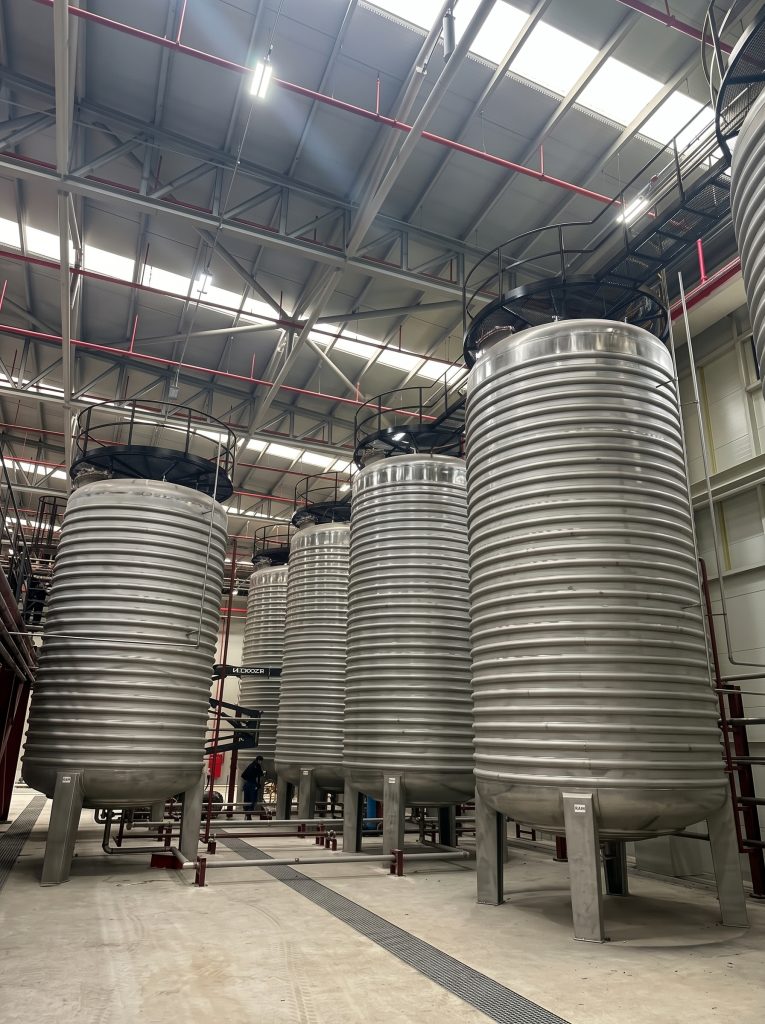
Stainless steel reactor manufacturing and industrial applications
Managing physical and chemical reactions under controlled temperature, pressure, and mixing parameters, these systems serve as the backbone of modern facilities with their high corrosion resistance and extended service life. In this guide, we review the operating principles, steel grades, and selection criteria for stainless steel reactors.
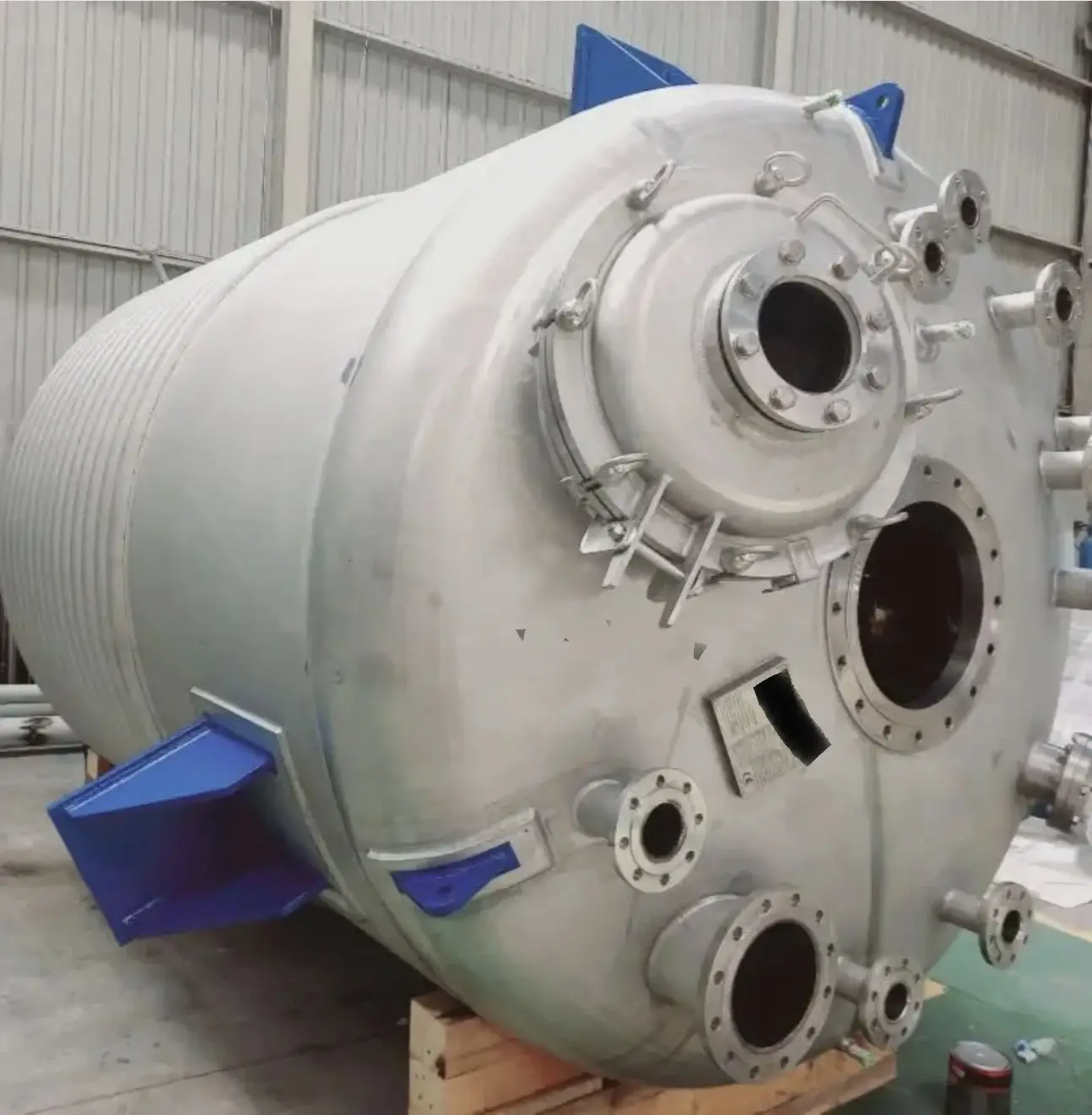
Stainless steel reactor industrial application
What is a Stainless Steel Reactor?
A stainless steel reactor is an enclosed, highly secure industrial process vessel that enables liquid, viscous, or semi-fluid raw materials to react at specific temperatures, pressures, and agitation speeds.
Unlike a basic storage unit, stainless steel reactors synchronously perform the following operations within a single vessel:
- High-speed and homogeneous mixing
- Precise heating and cooling (thermal control)
- Degassing and boiling under vacuum
- High-pressure reaction management
- Homogenization and emulsification
- Solid-liquid phase dissolution
- Crystallization and polymerization
- Automation-assisted safe discharge
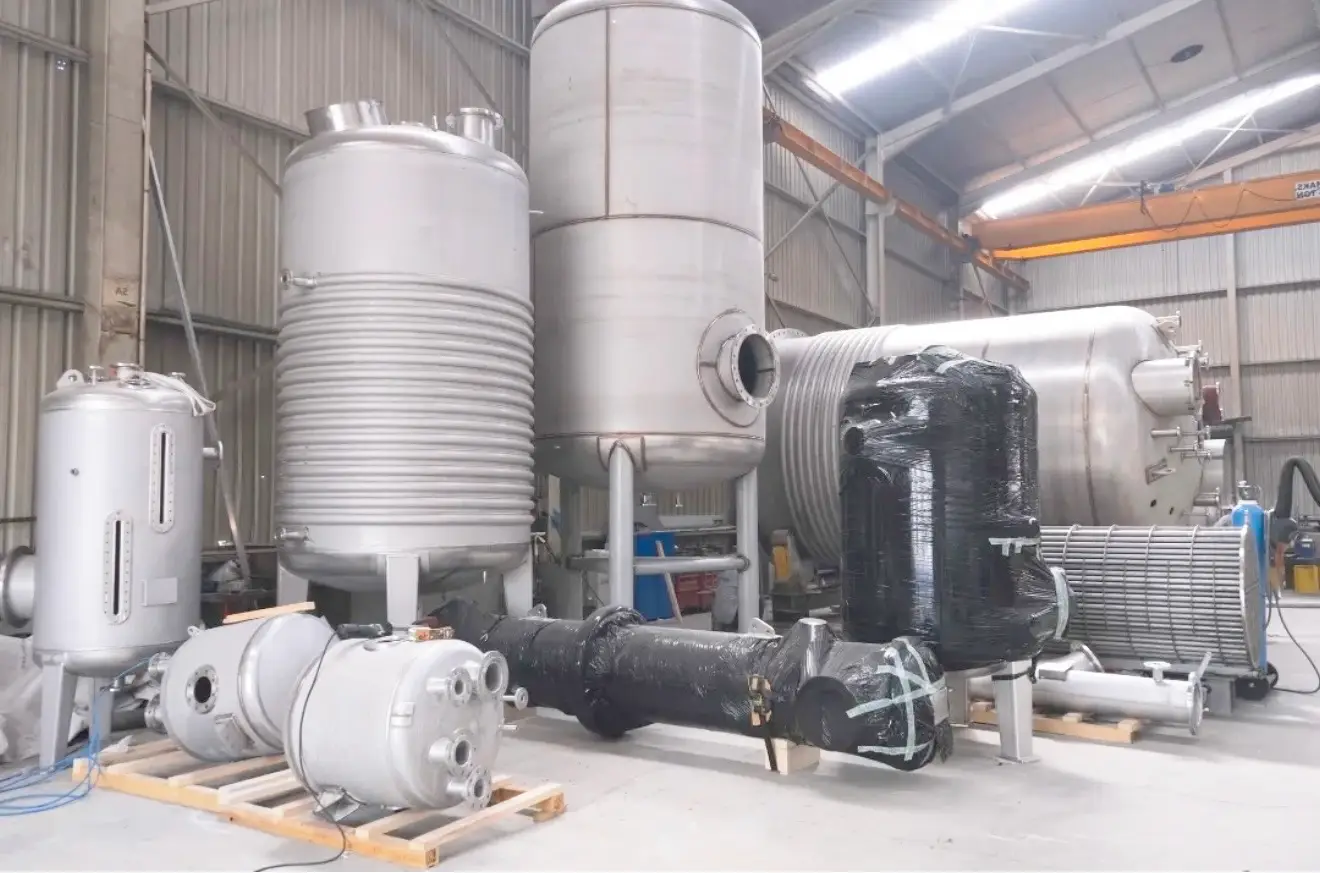
Stainless steel reactor industrial application
How Does a Stainless Steel Reactor Work? Process Steps
The operational sequence of an industrial reactor proceeds as follows:
- Raw Material Feeding: Liquid or powder raw materials enter the vessel through nozzles, a manhole cover, or a dedicated vacuum line.
- Mixing Cycle: Agitator impellers (anchor, turbine, disperser), selected based on product viscosity, activate via the motor-gearbox assembly.
- Thermal Transfer: Process temperature is regulated by supplying steam, thermal oil, or chilled water to the external jacket or internal coil system.
- Pressure and Vacuum Management: Depending on reaction parameters, the vessel is placed under positive pressure, or vacuum pumps are engaged to prevent foam and gas formation.
- Discharge and CIP Cleaning: Once the reaction finishes, product is transferred through the bottom flush valve, and the vessel interior is sanitized via CIP spray balls.
Process Safety Note: In modern stainless steel reactors, PLC automation, PID temperature controllers, pressure transmitters, and rupture discs prevent operational deviation, ensuring zero-defect production cycles.
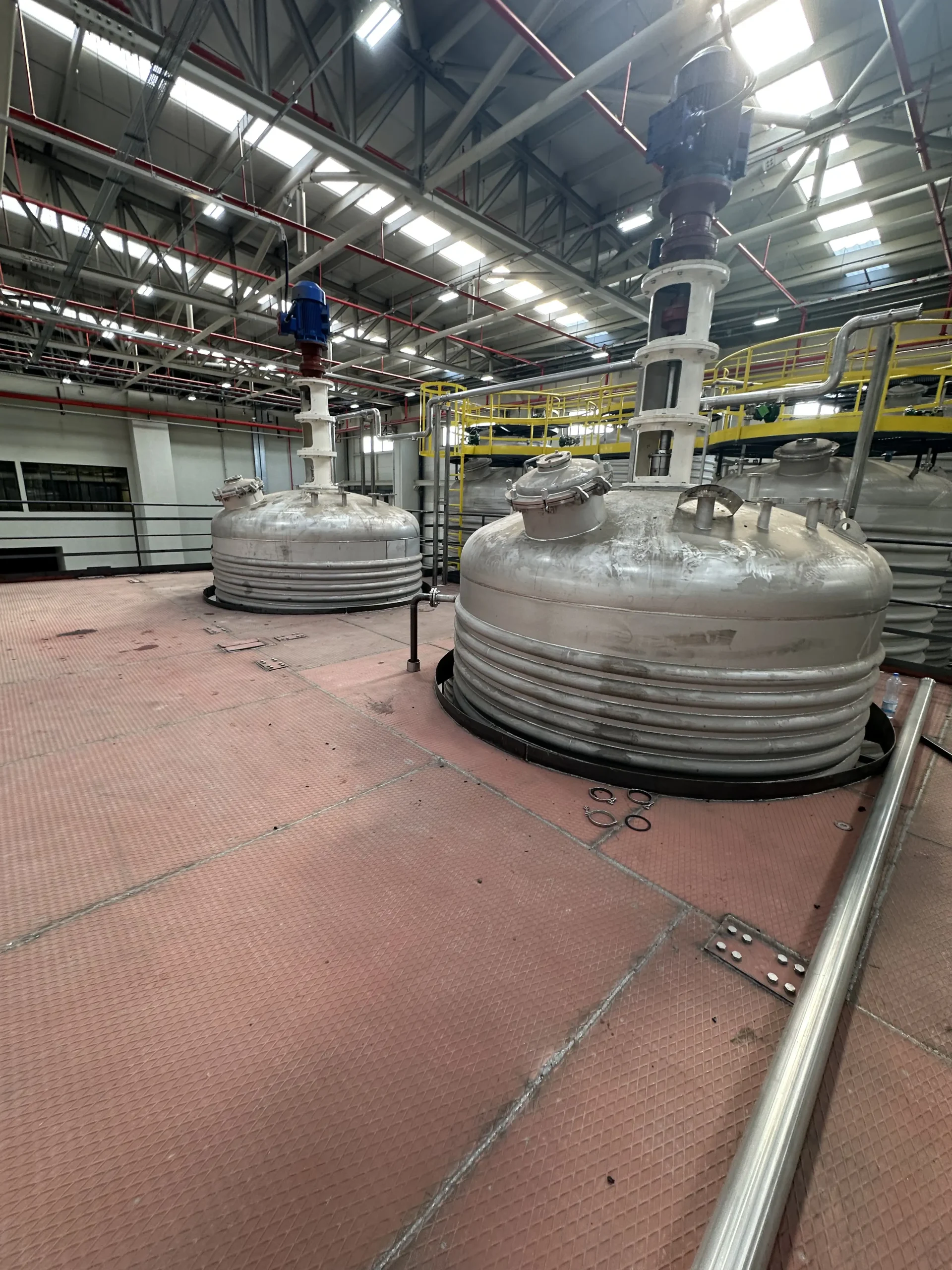
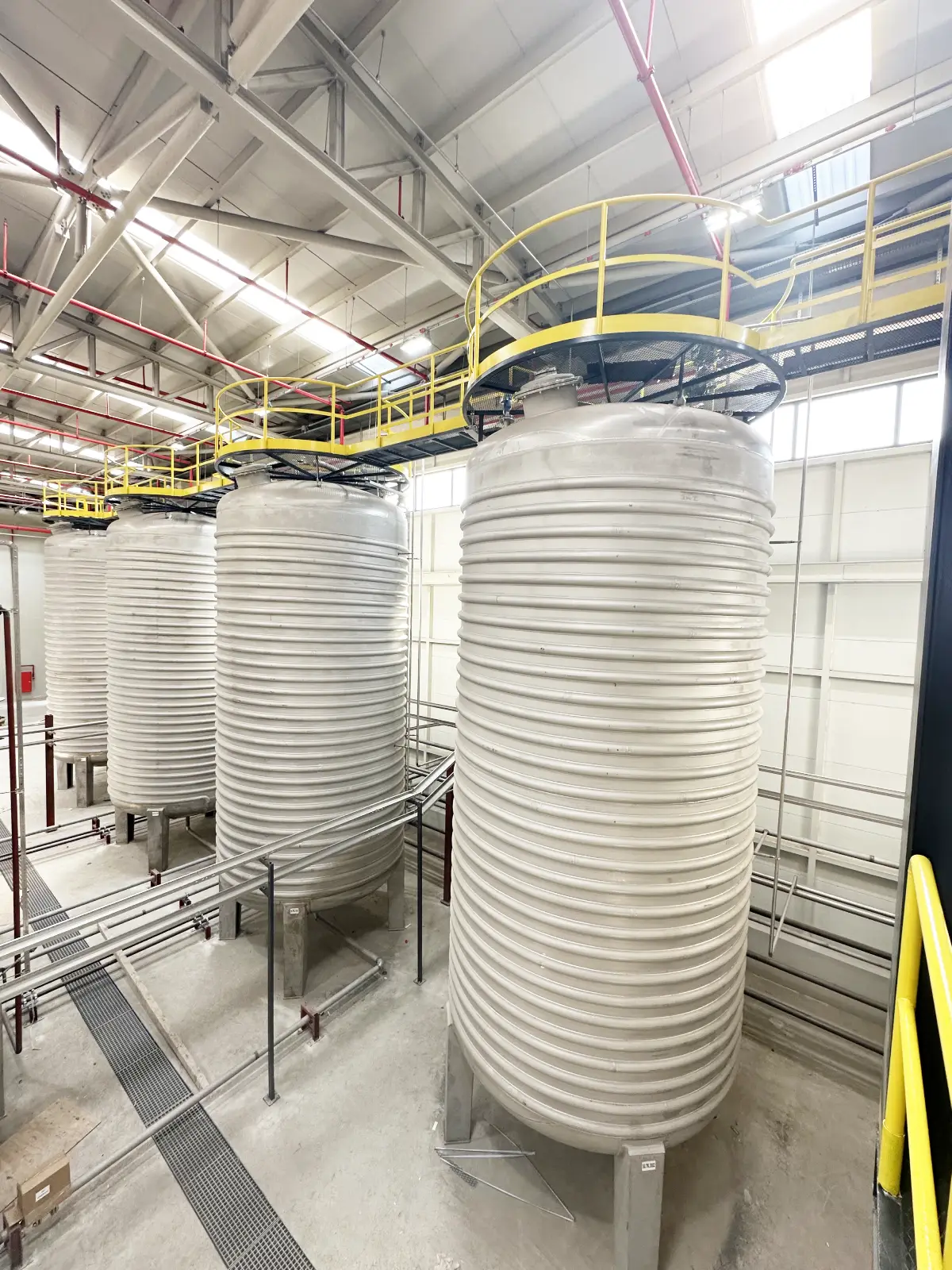
Stainless steel reactor industrial application
Core Features and Advantages of Stainless Steel Reactors
| Technical Feature | Process Advantage Provided |
|---|---|
| Corrosion Resistance | Maximum durability and prolonged vessel service life against acids, bases, and corrosive chemical agents. |
| Hygienic Surface (Ra Value) | A mirror-polished interior surface prevents bacterial adhesion; fully compliant with pharmaceutical and food sanitation codes. |
| Efficient Heat Transfer | Homogeneous heating and rapid shock-cooling capability via dimple jackets or half-pipe limpet coils. |
| Broad Pressure Range | Safe operational tolerance spanning from full vacuum (-1 bar) conditions to high design pressures. |
| CIP/SIP Compatibility | Seamless in-place washing (Clean-in-Place) and in-place steam sterilization (Sterilization-in-Place) without dismantling the system. |
Stainless Steel Grades Used in Industrial Reactors
Specifying the correct stainless steel grade prevents pitting, general corrosion, and product contamination:
| Steel Grade | Key Characteristics | Primary Application Area |
|---|---|---|
| AISI 304 / 304L | Cost-effective, standard corrosion resistance, 18% Chromium and 8% Nickel alloy composition. | Food, beverage, dairy processing, and standard water-based chemical solutions. |
| AISI 316 | Enhanced resistance against acids, chlorides, and aggressive chemicals with 2-3% Molybdenum addition. | Chemical synthesis, petrochemical, and cosmetics processing vessels. |
| AISI 316L | Ultra-low carbon chemistry eliminates intergranular corrosion risks across welded heat-affected zones. | Pharmaceuticals, biotechnology, API synthesis, and sterile processing lines. |
| Duplex (1.4462) | Austenitic-ferritic hybrid structure; extreme mechanical strength paired with high chloride stress cracking resistance. | Heavy chemical plants, marine/saline applications, and highly aggressive reactions. |
Types of Stainless Steel Reactors by Design and Application
The primary reactor configurations manufactured according to plant requirements include:
1. Jacketed and Limpet Coil Reactors
Provides accurate temperature regulation through conventional double-wall jackets or externally welded half-pipe (limpet) coils. High thermal transfer rates optimize utility and energy consumption during production runs.
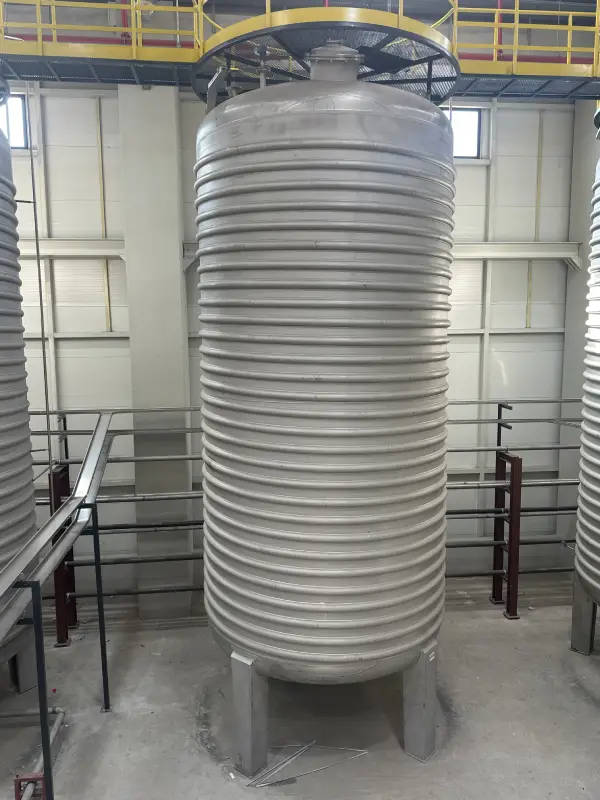
Stainless steel limpet coil reactor manufacturing and industrial applications
2. Vacuum Reactors
Engineered to facilitate boiling at reduced temperatures, extract micro-air bubbles, and establish smooth textures for viscous mediums. Widely utilized in manufacturing cosmetic creams, toothpastes, polymers, gels, and adhesives.
3. High-Pressure Process Reactors
Designed for polymerization and chemical synthesis reactions requiring elevated internal pressures. These vessels incorporate calculated shell wall allowances, dual mechanical seals, and certification under the PED (2014/68/EU).
4. Reactors Categorized by Impeller Configuration
Internal agitator geometries vary according to the fluid rheology:
- Anchor Agitator: Configured with wall scrapers for high-viscosity products to optimize heat exchange at vessel walls.
- Turbine and Propeller Impellers: Delivers rapid liquid circulation, blending, and effective solid suspension in low-viscosity applications.
- High-Shear Disperser: Built to emulsify immiscible liquid phases and deliver micron-scale particle dispersion.
Differences Between a Stainless Steel Reactor and a Mixing Tank
Key structural and operational differences between these two vessel categories include:
| Comparison Parameter | Stainless Process Reactor | Standard Mixing Tank |
|---|---|---|
| Chemical Reaction Management | Fully compliant (Phase shifts, synthesis, off-gassing) | Restricted to physical blending and homogenization |
| Pressure / Vacuum Rating | Engineered for high positive pressure and full vacuum | Typically atmospheric (open top or light inspection lid) |
| Thermal Control Precision | Precise PID-controlled jacket or coil circulation | Optional or basic electric element heating |
| Sealing Technology | Double mechanical seals (thermosiphon-assisted) | Single lip seal, labyrinth, or basic bearing assembly |
| Automation Integration | Full SCADA / PLC batch recipe management | Manual VFD speed dial or basic on/off starter |
7 Critical Criteria for Selecting a Stainless Steel Reactor
- Chemical Corrosiveness and Acidity: Match medium pH profiles to 304, 316L, or specialized Duplex/Hastelloy grades.
- Viscosity and Flow Behavior: Evaluate viscosity (in cP) to determine drive torque, gear reduction ratios, and impeller profiles.
- Heat Exchange Dynamics: Required ramp-up and cool-down durations dictate jacket contact surface area and flow rates.
- Containment and Sealing: Processes involving hazardous off-gassing or toxic chemicals require gas-tight double mechanical seals.
- Regulatory Certifications: Verify requirements for the Pressure Equipment Directive (PED 2014/68/EU), ATEX (explosion proofing), and ASME Section VIII.
- Hygienic Surface Finish: Specify internal mechanical or electropolishing tolerances (Ra < 0.4 µm) with dead-leg-free geometries for pharma and food applications.
- Working Volume and Headspace: Account for liquid thermal expansion and foam head margins by engineering adequate freeboard above nominal batch volumes.
Frequently Asked Questions (FAQ)
Why is AISI 316L stainless steel preferred in reactor manufacturing?
AISI 316L contains 2-3% molybdenum, providing high resistance against pitting corrosion from chlorides and organic acids. The low-carbon (“L”) designation prevents chromium carbide precipitation during welding, preserving localized corrosion resistance across weld joints.
What is the difference between a conventional jacketed and a limpet coil reactor?
In conventional jacketed models, heat transfer media flows throughout the annular space between shells, offering simple fabrication for low-pressure utilities. Limpet (half-pipe) coil reactors isolate media within welded pipe paths, handling high-pressure steam or hot thermal oil under safer operating parameters.
How is stainless steel reactor capacity calculated?
Capacity calculations consider target batch volume, fluid density, agitation dynamics, and foaming tendencies. In standard operations, 70% to 80% of total geometric volume is designated as working capacity, reserving the balance as process headspace.
Can stainless steel reactors be manufactured to ATEX standards?
Yes. For facilities handling flammable solvents, vapors, or explosive powders, reactor drives, gearboxes, instrumentation, mechanical seals, and level transmitters are fully engineered to ATEX Zone 1 or Zone 2 standards.
🛠️ Custom Stainless Steel Reactor Engineering
Connect with our engineering team to design bespoke AISI 304, 316L, and Duplex reactors tailored precisely to your operational batch volumes, viscosity demands, and pressure ratings.