

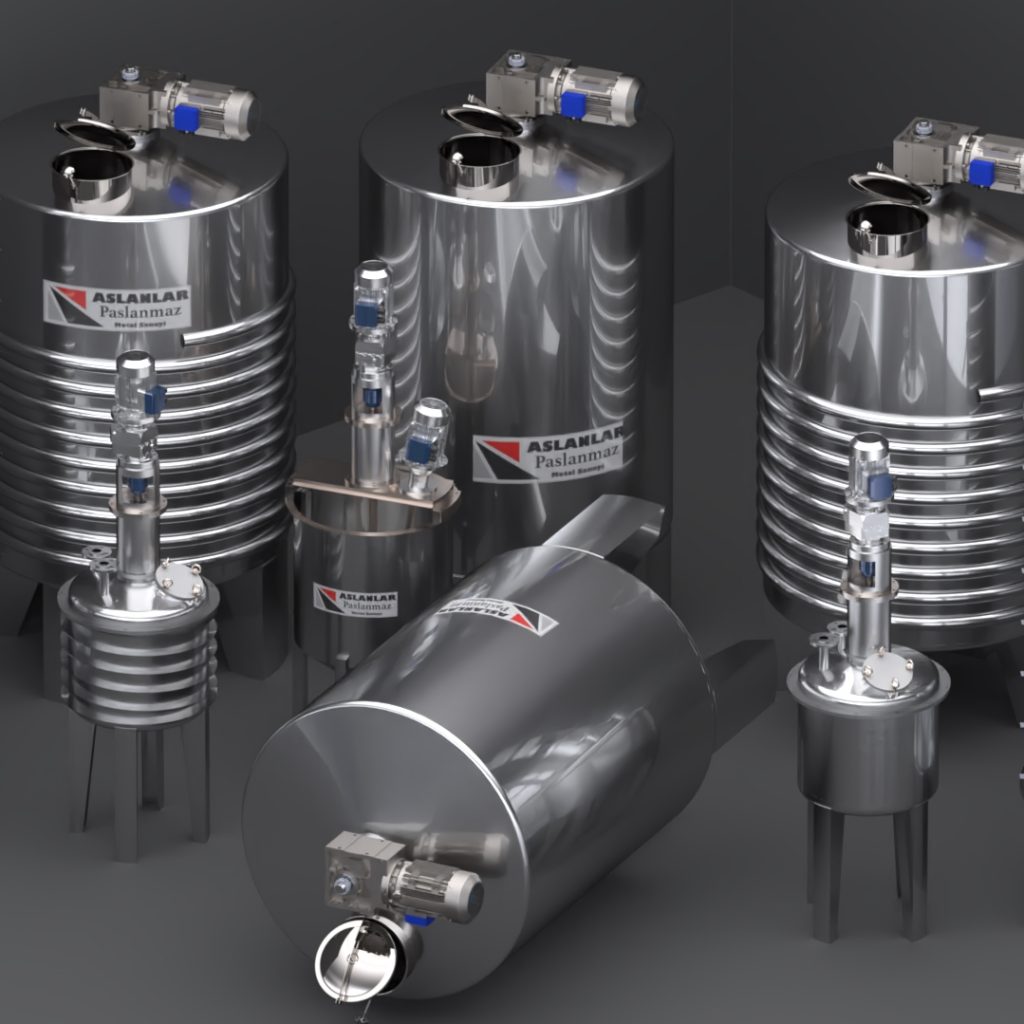
Stainless Steel Reactors for the Pharmaceutical Industry: A Comprehensive Guide
1. Introduction
Pharmaceutical manufacturing is a critical process that must be carried out under hygienic and safe conditions. The equipment used during production must meet high-quality standards. Stainless steel reactors are one of the most commonly used equipment in the pharmaceutical industry for conducting chemical reactions in a controlled environment.2. What is a Stainless Steel Reactor?
Stainless steel reactors are closed tank systems used to allow chemicals in liquid or gaseous form to react under specific temperature and pressure conditions. They are widely used in the pharmaceutical, chemical, and food industries.2.1. Usage Areas of Stainless Steel Reactors
- Pharmaceutical production
- Chemical industry
- Biotechnology applications
- Cosmetic production
- Food and beverage industry
3. Working Principle of Stainless Steel Reactors
Stainless steel reactors are specifically designed to perform various physical and chemical processes.3.1. Chemical Reaction Processes
The main chemical processes occurring in reactors:- Polymerization
- Hydrolysis
- Oxidation
- Neutralization
3.2. Heating and Cooling Systems
To control the reaction temperature:- Jacketed heating and cooling systems
- Heating with steam or hot water
- Cooling with glycol or liquid nitrogen
4. Types of Stainless Steel Used in the Pharmaceutical Industry
The stainless steel used in pharmaceutical production must be corrosion-resistant, easy to clean, and suitable for sterilization.4.1. 304 Stainless Steel
- Suitable for general use.
- Provides moderate corrosion resistance.
4.2. 316 Stainless Steel
- More resistant to aggressive chemicals.
- Resistant to seawater and chlorinated compounds.
4.3. 316L Stainless Steel
- Carries less corrosion risk due to its low carbon content.
- Complies with FDA and GMP standards.
5. Production Process of Stainless Steel Reactors
The production stages of stainless steel reactors are as follows:5.1. Raw Material Selection
- Produced from 304, 316 or 316L stainless steel.
5.2. Cutting and Welding Operations
- Special laser cutting machines are used.
- Welding must be done in accordance with hygienic standards.
5.3. Surface Treatments and Hygiene Coatings
- The surface is smoothed by electropolishing.
- Ease of cleaning is ensured.
6. Advantages of Stainless Steel Reactors
- Durability: Long-lasting and resistant to high pressure.
- Hygiene: Complies with GMP and FDA standards.
- Corrosion Resistance: Shows high resistance to chemicals.
7. Basic Components of Stainless Steel Reactors
- Mixers: Ensure a homogeneous mixture is obtained.
- Heating and Cooling Systems: Optimize the reaction temperature.
- Pressure Control Mechanisms: Critically important for safety.
8. Hygiene and Sterilization in Stainless Steel Reactors
- CIP (Clean-in-Place): Chemical cleaning method.
- SIP (Sterilize-in-Place): Provides high-temperature sterilization.
9. Safety Measures in Stainless Steel Reactors
- Overpressure valves
- Temperature monitoring systems
- Automatic shut-off mechanisms
10. Pressure and Temperature Control in Stainless Steel Reactors
- Pressure regulating valves
- Heating-cooling jackets
- Digital temperature monitoring systems
11. Maintenance and Service Life of Stainless Steel Reactors
With regular maintenance, the service life of stainless steel reactors can vary between 20-30 years.12. GMP Standards and Stainless Steel Reactors
- GMP (Good Manufacturing Practices) Applications
- FDA-approved stainless steel reactors
- Sterilization and quality control processes
13. Automation and Digitalization in Stainless Steel Reactors
- IoT-based remote control
- Artificial intelligence-supported monitoring systems
14. Stainless Steel Reactor Manufacturers and Selection Criteria
- Leading manufacturers in Turkey
- International manufacturers
- Criteria for choosing the right stainless steel reactor
15. Cost and Return on Investment of Stainless Steel Reactors
- Pricing Factors
- Long-Term Investment Advantages
- Cost-Benefit Analysis
Frequently Asked Questions (FAQ)
Can be used for 20-30 years with regular maintenance.
Chemical or temperature-based cleaning is possible with CIP and SIP systems.
316L stainless steel is the most hygienic and durable option.
Capacity varies depending on material quality and additional equipment.
Must be sourced from manufacturers with GMP and FDA certifications.