

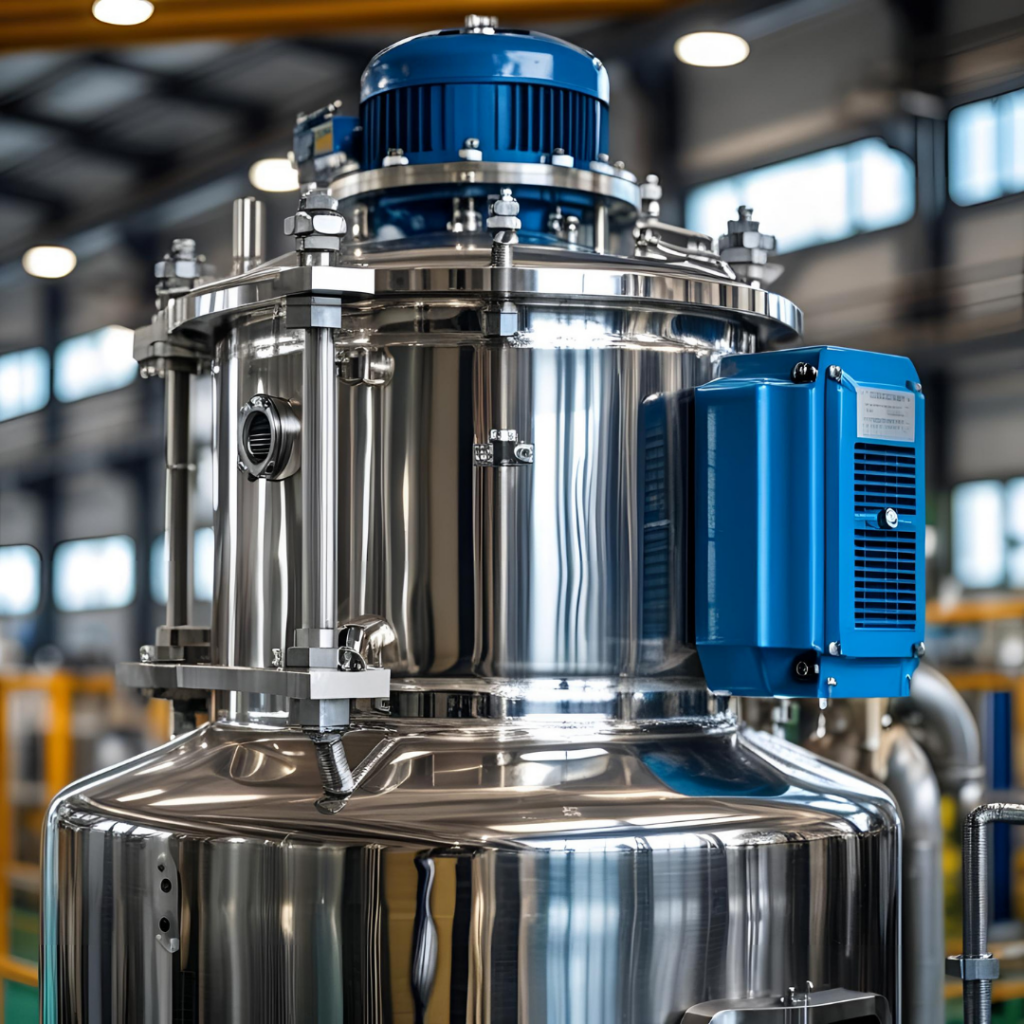
What is Stainless Steel Reactor Manufacturing?
Stainless steel reactors are specially designed equipment, usually used in industrial plants, where chemical reactions take place in a controlled manner. These reactors are manufactured from stainless steel due to their resistance to high temperatures, pressure, and corrosion. The manufacturing process requires technical knowledge, precise engineering, and experience.
Reactor Definition and General Usage Areas
Reactors are systems in which one or more substances undergo physical or chemical reactions. They are indispensable in the chemical, food, pharmaceutical, cosmetic, and biotechnology sectors. Many processes such as heating, cooling, and mixing are carried out simultaneously in these systems.
Reasons for Preferring Stainless Steel Material
Stainless steel is the most preferred material in reactor manufacturing due to its durability, hygienic structure, and long lifespan. In addition, stainless steel’s resistance to corrosion, low maintenance costs, and aesthetic appearance offer significant advantages.
Classification of Stainless Steel Reactors
Single-Walled and Double-Walled Reactors
Single-walled reactors are sufficient for simple applications. However, double-walled models are preferred in processes where temperature control is important. Thanks to the double wall, heat transfer fluid can be introduced inside.
Reactors with Agitators
Agitators are critical for ensuring homogeneous mixing and increasing reaction yield. Motor power and impeller type are determined according to the nature of the process.
Heated and Cooled Reactors
For some chemical reactions, the temperature needs to be controlled. In this case, heating/cooling systems integrated into the reactor wall come into play.
Stainless Steel Reactor Manufacturing Process
Engineering Design and Project Planning
The manufacturing process begins with detailed engineering studies. Capacity, pressure values, and design features suitable for the need are determined.
Material Selection to Be Used
AISI 304 or 316 quality stainless steel is generally used. 316L quality steel is preferred in corrosive environments.
Use of CAD/CAM Software
In the design phase, all details are planned in advance with 3D modeling software. In this way, the risk of error during production is minimized.
Production Process Stages
Laser Cutting and Bending
Materials are cut with high precision and bent into the desired shape.
Welding and Assembly Process
Parts are joined with TIG/MIG welding technologies. Hygienic welding applications are very important in terms of surface smoothness.
Surface Treatments and Cleaning
Pickling and Passivation
Welding residues and oxide layers on the surface are cleaned with acid, and resistance to corrosion is increased.
Quality Control and Testing Processes
Leakage Tests
The safety of the reactor is ensured with tests against liquid and gas leaks.
Pressure Tests and Safety Checks
After manufacturing, the reactor is tested at specified pressure values. These tests guarantee that the product is safe and long-lasting.
Stainless Steel Reactor Manufacturing with Asinoks Quality
Asinoks’s Experience and References in Manufacturing
Asinoks offers special reactor solutions to industrial companies all over Turkey with years of experience. It makes a difference with quality, customer satisfaction, and engineering principles.
Custom Designs for the User
Every sector is different; Asinoks also offers a special solution for each project. We design a reactor that suits your needs and is specific to you.
Compliance with International Standards
Thanks to production in accordance with ASME, CE, and ISO standards, safe and certified products are delivered.
Sectoral Application Areas
Chemical Industry
Stainless steel reactors are ideal for mixing aggressive substances such as acids, bases, and solvents.
Food and Beverage Industry
In this sector where hygiene is at the forefront, stainless steel reactors are used in the production of products such as milk, fruit juice, and sugar syrup.
Pharmaceutical and Cosmetic Production
Stainlessness and hygienic design are of great importance in these areas that require a sterile environment.
Maintenance and Durability in Stainless Steel Reactors
Corrosion Resistance
Stainless steel is highly resistant to chemicals. This extends the life of the device.
Ease of Cleaning and Hygiene
Thanks to its smooth surface structure, it is easy to clean and prevents bacterial formation.
What Should Be Considered When Choosing a Reactor?
Capacity and Pressure Values
The process volume and the pressure level to be worked at must be selected correctly.
Agitator Type and Motor Power
The density of the mixture and the process time affect these parameters.
Certifications and Documents
Products with ASME, CE, ISO certificates are always preferred.
Sustainability and Environmental Awareness
Use of Recyclable Material
Stainless steel is a 100% recyclable material.
Energy Efficiency Designs
Insulated bodies and efficient agitators reduce energy consumption.
Costing Process
Factors Affecting the Price
Capacity, wall structure, motor power, and additional equipment affect the cost.
Economic Advantages It Provides in the Long Term
The total cost decreases thanks to low maintenance costs and a long lifespan.
Common Mistakes and Things to Consider
Use of Cheap and Non-Standard Materials
Although the initial investment is low, it causes serious problems in the future.
Uncontrolled Production Processes
Uncertified and uncontrolled products pose a great risk in terms of operational safety.
Contact Asinoks
As Asinoks, we are happy to design reactors specific to your every need. Contact us and let’s create the most suitable solution for you together.
Conclusion
Stainless steel reactor manufacturing is a process that requires advanced engineering and high quality. Asinoks offers reliable solutions both locally and globally. Trust Asinoks’s experience for durable, hygienic, and economical reactors.
Frequently Asked Questions (FAQ)
- What is a stainless steel reactor and what does it do?
Stainless steel reactors are used to carry out chemical reactions safely and in a controlled manner. - Which quality stainless steels are used?
Generally, AISI 304, 316, and 316L quality stainless steels are preferred. - Do Asinoks reactors have international certifications?
Yes, it has international quality certifications such as CE, ISO, and ASME. - What is the lifespan of stainless steel reactors?
They have a service life of 20 years and more, depending on usage and maintenance. - How are reactor prices determined?
Technical features such as capacity, wall structure, and motor power determine the price.